China Top Steel Building Construction Manufacturers?

China has become a major source of steel building construction for warehouses, workshops, stadiums, and modular commercial facilities. However, choosing a leading manufacturer requires more than comparing online prices. Factory capacity, engineering quality, material traceability, and project experience deserve careful attention.

This guide examines China’s top steel building construction manufacturers through practical and verifiable criteria. These criteria include structural design capability, welding standards, coating systems, production equipment, quality inspections, and international delivery experience. Real project evidence matters. A reliable supplier should provide drawings, steel grades, connection details, inspection records, and clear installation guidance. Site support also matters when a 30-meter frame must align with foundations accurately.

“Top” is not a permanent label.

Manufacturers may excel in different areas. One company may offer stronger engineering support, while another provides faster fabrication or better modular solutions. Public information can also be incomplete, and some company claims require independent verification. Therefore, this overview avoids treating marketing language as proof. It encourages buyers to request recent project references, visit factories when possible, and compare quotations line by line. Important details include transportation terms, corrosion protection, warranty coverage, and local building-code compliance. These checks help create a more balanced view of each manufacturer’s expertise, reliability, and suitability for specific construction needs.
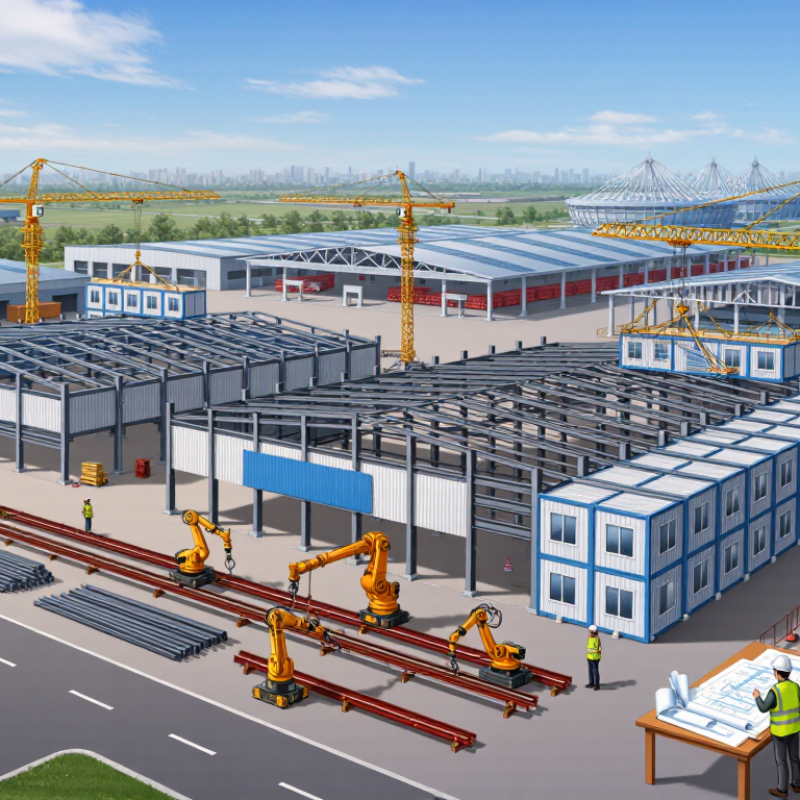
China Top Steel Building Construction Manufacturers?

What Defines a Leading Steel Building Manufacturer in China?

A leading steel building manufacturer in China is defined by controlled delivery, not factory size alone. China produced about 1,019 million tonnes of crude steel in 2023, according to World Steel Association data. That scale creates strong supply advantages, but raw steel volume does not prove construction quality. The real test is whether a manufacturer converts design loads into accurate shop drawings, qualified welds, and traceable components.

Look for documented welding procedures, material certificates, ultrasonic testing, and calibrated inspection equipment. Experienced teams should coordinate BIM models, connection details, fire protection, corrosion treatment, and transport packaging before fabrication begins. Factory quality plans should identify each column, beam, bolt, and coating batch. Independent inspections add credibility. They also expose uncomfortable mistakes early. No factory is flawless.

A responsible manufacturer should understand lifecycle performance, not only the quoted tonnage. The 2023 UNEP Global Status Report for Buildings and Construction states that buildings and construction consume 34% of global energy and create 37% of energy and process-related carbon emissions. Efficient spans, recyclable steel, durable coatings, and reduced site rework therefore matter. Compliance with applicable GB, ISO, EN, or ASTM requirements must be project-specific and verifiable. Low prices can be attractive. They can also hide thinner coatings, weak documentation, or rushed welding. A serious evaluation compares inspection records, production capacity, engineering experience, and after-sales response, rather than relying on polished photographs.

China Steel Building Manufacturing Capacity: Industry Context

A leading steel building manufacturer needs dependable access to steel, consistent production capacity, engineering control, and reliable project delivery. China’s crude steel output provides useful context for evaluating the depth of the domestic steel supply base.

China crude steel production: 2019–2023, measured in million tonnes. Source: World Steel Association, World Steel in Figures 2024.

Major Types of Steel Building Construction Manufacturers

Steel building construction manufacturers generally fall into several practical categories. Design-build manufacturers handle engineering, fabrication, and installation through one coordinated service. This model can reduce communication gaps on warehouses, workshops, and industrial halls. However, it may offer fewer independent choices for materials or site contractors.

Prefabricated building manufacturers produce standardized frames, panels, and connection parts in controlled factory conditions. Their systems suit agricultural buildings, storage facilities, and small commercial projects. Modular manufacturers go further by delivering factory-assembled sections that reduce on-site labor. Custom structural manufacturers focus on unusual spans, heavy equipment loads, or complex architectural forms. They usually require detailed drawings, soil reports, and accurate load calculations before production begins.

Component manufacturers supply items such as steel columns, roof panels, stairs, or wall systems to other builders. This approach can lower purchasing costs, but compatibility must be checked carefully. Experienced buyers review steel grades, welding procedures, bolt specifications, corrosion protection, and inspection records. They also confirm whether drawings follow the required local building standards. A factory visit can reveal storage conditions, cutting accuracy, and quality-control habits. Small details matter.

The best choice is not always the largest manufacturer. An overlooked issue is after-sales support when replacement panels or technical documents are needed years later. Some projects also underestimate transport limits and crane access. Comparing production capacity, engineering experience, documented testing, delivery controls, and communication practices gives a more reliable basis for selection. Mistakes still happen, so clear responsibilities should be written before fabrication begins.

Key Services Offered by China’s Steel Building Companies

China’s leading steel building construction manufacturers now provide more than prefabricated frames. They commonly support structural design, load calculations, shop drawings, steel cutting, welding, surface treatment, and site assembly. This integrated service reduces coordination gaps between engineers, fabricators, and contractors.

The World Steel Association reported that China produced about 1.005 billion tonnes of crude steel in 2024. This scale supports extensive fabrication capacity, but volume alone does not prove quality. Buyers should request mill certificates, welding procedure qualifications, coating records, and independent inspection reports. Clear traceability matters.

Engineering support is increasingly digital. Many companies offer BIM coordination, clash detection, quantity schedules, and CNC-ready fabrication files. These tools can expose a misplaced column before it reaches the workshop. The National Bureau of Statistics of China reported continued growth in industrial investment during 2024, increasing demand for warehouses, factories, and logistics facilities. Services often include foundation interface reviews, erection planning, safety documentation, and maintenance guidance.

After-sales support varies widely. Some suppliers provide remote supervision, while others send qualified site engineers for critical installation stages. That distinction affects cost and schedule. A low initial quotation may exclude transport, crane access, fireproofing, or local compliance reviews. This is where procurement teams can misjudge the real budget. Strong manufacturers explain exclusions in writing and revise drawings when site conditions change. Errors still happen. Reliable communication limits their impact.

How to Evaluate Chinese Steel Building Manufacturers

Evaluating Chinese steel building manufacturers requires more than comparing prices. Start with verifiable experience in projects similar to yours. Ask for completed building addresses, project sizes, steel grades, and delivery dates. Then contact previous clients directly. Their feedback may reveal installation delays or communication problems hidden in polished brochures.

Review the manufacturer’s engineering process carefully. Qualified engineers should provide structural calculations, connection details, shop drawings, and clearly stated design standards. Request material mill certificates and welding procedure records. Inspect how workers mark steel members, protect surfaces, and control dimensional accuracy. A reliable factory should explain its quality checkpoints without hesitation. Ask for evidence. Details matter.

A factory audit can show practical strengths. Look at cutting equipment, welding bays, storage conditions, and packing methods. Moisture, poor labeling, and crowded storage can damage components before shipment. Confirm whether independent inspectors may check materials and production. The contract should define tolerances, inspection stages, delivery terms, and remedies for defects. Clear communication also matters; technical questions should receive precise written answers. Be cautious when every answer sounds perfect. In real projects, revisions happen, and a manufacturer that admits limitations may be more dependable. I would also test a small sample of drawings before approving full production. This step takes time, but it can expose missing dimensions, conflicting notes, or unsuitable connections early. A low quotation is not necessarily efficient if corrections consume the schedule.

China Top Steel Building Construction Manufacturers? - How to Evaluate Chinese Steel Building Manufacturers
A practical, standards-based comparison framework for evaluating steel building manufacturers without relying on company names or brand rankings.
Evaluation Dimension Measurable Indicator Reference Benchmark or Requirement Recommended Verification Evidence Suggested Weight
Structural Design Capability Design code coverage and calculation quality The supplier should clearly identify the governing design code, load combinations, wind and seismic parameters, serviceability limits, connection design method, and foundation interface requirements. Stamped structural calculations where legally required, general arrangement drawings, connection details, design assumptions, and a project-specific design responsibility matrix. 15%
Steel Material Compliance Steel grade, yield strength, tensile strength, and traceability For example, Q355 structural steel under GB/T 1591 has a minimum yield strength of 355 MPa for thicknesses up to 16 mm. Equivalent grades must be confirmed against the project specification rather than assumed. Mill test certificates, heat numbers, material inspection records, chemical composition reports, and a traceability register linking materials to fabricated members. 15%
Welding Quality Welder qualification, welding procedure control, and inspection coverage Welding procedures should be qualified for the applicable material and joint type. ISO 3834 provides a recognized quality framework, while project specifications may require visual, ultrasonic, magnetic-particle, or radiographic testing. Qualified Welding Procedure Specifications, Procedure Qualification Records, welder certificates, weld maps, inspection reports, and nonconformance closure records. 15%
Fabrication Accuracy Dimensional tolerance and assembly fit-up Fabrication tolerances should be defined by the applicable project standard, such as EN 1090-2 or the contract specification. Critical dimensions should be checked before shipment and during trial assembly where necessary. Inspection and Test Plans, dimensional inspection reports, calibrated measuring equipment records, trial-assembly photographs, and approved shop drawings. 12%
Surface Protection Coating system, dry-film thickness, and corrosion category The coating specification should state surface preparation, primer and topcoat system, environmental exposure category, repair method, and required dry-film thickness. Hot-dip galvanizing requirements should reference ISO 1461 or the project standard. Surface-preparation records, abrasive profile readings, paint batch certificates, dry-film thickness measurements, galvanizing certificates, and repair inspection reports. 10%
Quality Management Documented quality system and corrective-action performance An ISO 9001-certified quality management system is a useful baseline, but certification alone does not prove product quality. The system should demonstrate document control, inspection planning, nonconformance management, and corrective-action effectiveness. Current certificate scope, internal audit summaries, quality manual, inspection records, nonconformance logs, corrective-action reports, and quality performance trends. 10%
Production Capacity Available fabrication area, equipment, and realistic monthly output Capacity should be assessed against the actual project tonnage, profile complexity, welding requirements, coating system, and required production window. Nominal annual capacity should not be accepted without supporting production records. Factory layout, equipment list, maintenance records, production schedules, shift structure, bottleneck analysis, and current capacity-loading statement. 8%
Testing and Inspection Resources In-house and independent inspection capability Inspection equipment should be calibrated and appropriate for the specified tests. Third-party inspection should be available when required by the purchaser, lender, insurer, or local authority. Calibration certificates, laboratory accreditation where applicable, NDT personnel qualifications, inspection staffing plan, and sample test reports with traceable identification. 6%
Packaging and Logistics Shipment protection, packing list accuracy, and export documentation Members should be protected against corrosion, impact, water ingress, and deformation during handling and transport. Shipping marks must match the erection sequence and packing list. Packing procedures, container-loading plans, lifting-point details, photographs before dispatch, commercial invoice, packing list, and transport damage procedure. 5%
Project Delivery Control Schedule reliability and change-management process The supplier should provide a baseline schedule with engineering, procurement, fabrication, inspection, coating, packing, and shipment milestones. Schedule changes should be documented with cause, impact, and recovery action. Integrated project schedule, weekly progress reports, procurement tracker, production records, risk register, change-order log, and documented recovery plans. 4%
Note: The percentages are a practical evaluation model and should be adjusted according to the project type, local building regulations, structural risk, corrosion exposure, delivery conditions, and inspection requirements. Standards and material grades must always be confirmed against the latest contract documents and applicable jurisdictional requirements.

Quality Standards and Global Projects in China’s Steel Industry

China’s leading steel building manufacturers are judged by more than low prices or large workshops. In practice, quality begins with qualified structural engineers, controlled fabrication, and documented material sourcing. Mills should provide heat numbers, mill certificates, and chemical test results for each critical batch. Details matter. Production teams check plate thickness, weld dimensions, bolt grades, and coating coverage against approved drawings. Independent inspectors can witness ultrasonic testing, dimensional checks, and trial assemblies before shipment.

Global projects require flexible compliance. A warehouse in Southeast Asia may follow one code, while a logistics center in Europe may require another. Experienced manufacturers map local design rules to systems such as ISO, EN, ASTM, or regional seismic standards. Their engineers review wind pressure, snow load, fire protection, drainage, and transport limits. Factory acceptance tests create useful evidence, not just reassuring claims. Digital inspection records also help clients trace a column from raw steel to final installation.

Site experience exposes the difference between paperwork and performance. Crews must protect painted surfaces, control bolt tension, and verify weld repairs after delivery. Small errors can become costly when cranes and foundations are already waiting. No factory is perfect. A missed tolerance or delayed certificate can still occur, even within a mature quality system. The reliable response is transparent reporting, corrective action, and documented reinspection. Buyers should request project references, audited procedures, and evidence from comparable climates. Price remains important, but repeatable quality often determines long-term structural performance.