China has become a major source of steel structure buildings for warehouses, workshops, logistics centers, stadiums, and commercial facilities. Its manufacturers offer broad production capacity, competitive pricing, and practical engineering support. Yet “top” should not mean the largest name alone. It should reflect design competence, fabrication accuracy, project experience, and dependable after-sales service.
This introduction examines how to identify reliable Chinese steel structure buildings manufacturers. It considers factory capabilities, engineering qualifications, material traceability, welding procedures, and quality-control systems. A capable supplier should provide clear drawings, signed calculations, inspection records, and realistic delivery schedules. Certifications can support credibility, but they should never replace technical verification. Project references matter more when they resemble your building’s span, load, climate, and intended use.
Details often reveal the difference. Look for organized cutting areas, labeled steel sections, calibrated testing equipment, and protected finished surfaces. Ask how the manufacturer handles corrosion protection, connection tolerances, drainage, insulation, and installation coordination. A site with clean storage and consistent documentation usually suggests stronger management. Usually, but not always. A polished showroom cannot prove long-term structural performance.
No ranking stays perfect.
Markets change, equipment improves, and service quality varies between projects. Some suppliers communicate well before signing but respond slowly after shipment. Others have modest marketing materials yet demonstrate careful engineering and reliable workmanship. Therefore, this guide encourages balanced evaluation through factory audits, independent inspections, reference checks, and detailed contracts. Practical evidence should lead the decision, not impressive promises.
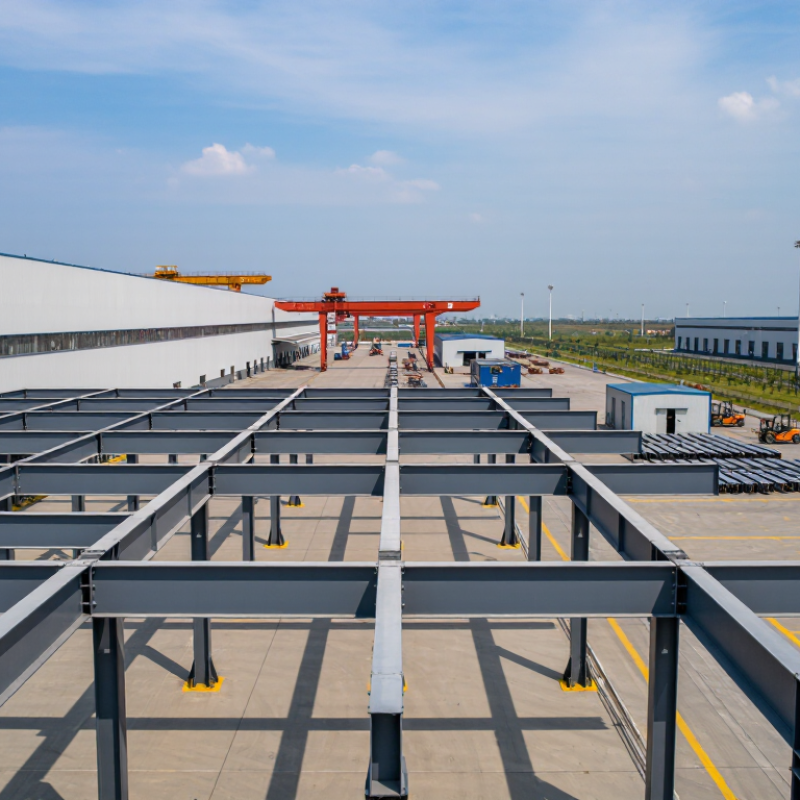
China’s leading steel structure buildings manufacturers are defined by verified capability, not factory size alone. The World Steel Association reported that China produced about 1.005 billion tonnes of crude steel in 2024. This scale supports strong material access, but volume does not guarantee reliable building performance.
A dependable manufacturer controls each stage, from mill certificates to site bolting. Look for heat-number traceability, qualified welders, calibrated cutting equipment, and documented dimensional checks. A 12-metre column should arrive within the agreed tolerance, with bolt holes aligned and surfaces protected. Production should also follow applicable Chinese standards and project-specific international codes. Fire resistance, seismic detailing, corrosion protection, and drainage design require engineering evidence, not attractive renders. The ISO Survey 2023 recorded more than 1.26 million ISO 9001 certificates worldwide, showing the value of structured quality systems, though certification alone is not proof of craftsmanship.
Ask for inspection records, nonconformance reports, coating thickness readings, and recent project references. Real experience appears in small details: labeled bundles, dry packing, clear erection drawings, and rapid responses when a site measurement changes. The International Energy Agency notes that steel remains a major industrial emissions source, so a serious supplier should also disclose recycled content, electricity use, and carbon data where available. Be cautious with the lowest quotation. It may exclude testing, fireproofing, or repair allowances. No factory is flawless. The stronger one identifies mistakes early, documents them honestly, and improves its process before shipment.
China’s steel structure building manufacturers often specialize by project type, not by one universal product line. This distinction matters when buyers compare quotations, engineering scope, and delivery promises. Warehouse manufacturers usually focus on clear spans, loading bays, ventilation, and fast installation. Their buildings may use portal frames, sandwich panels, and adjustable crane systems. Small details matter.
Industrial workshop manufacturers handle heavier demands, including overhead cranes, machinery vibration, fire separation, and service platforms. They normally coordinate structural calculations with electrical, drainage, and production layouts.
Agricultural building manufacturers serve livestock shelters, equipment sheds, and grain storage projects. Here, moisture control and airflow can be more important than polished appearance. That is easy to overlook.
Commercial and modular building manufacturers produce offices, showrooms, schools, and worker accommodation with tighter interior requirements. They must consider insulation, daylight, acoustic comfort, evacuation routes, and local construction codes. Residential specialists often use light-gauge or prefabricated systems to shorten site work. From project experience, the cheapest steel frame is rarely the cheapest finished building. Incomplete drawings create revisions. Buyers should request material certificates, welding records, corrosion protection details, and independent inspection arrangements. Manufacturers with transparent calculations and realistic schedules are easier to trust, although no supplier avoids every mistake.
China Top Steel Structure Buildings Manufacturers?
China’s steel structure sector combines high-volume production with increasingly detailed engineering control. The World Steel Association’s World Steel in Figures 2025 reports about 1,005 million tonnes of crude steel production in China during 2024. This industrial scale supports stable material sourcing, but volume alone does not prove quality.
Reliable manufacturers normally begin with certified steel plates, ultrasonic testing, and digital material tracking. CNC plasma or laser cutting improves dimensional accuracy. Automated welding reduces inconsistency along long seams. Fabricators then use shot blasting, primer application, and galvanizing to protect exposed components. BIM coordination helps engineers detect clashes before fabrication. Structural calculations must also address wind, earthquakes, fire resistance, crane loads, and connection behavior. The process sounds clean. Site conditions are not always clean.
Tips: Ask for mill certificates, weld inspection records, coating thickness readings, and a sample erection drawing. Check whether the engineering team can explain bolt grades and connection tolerances in plain language. A useful factory audit should follow one beam from raw plate to final inspection. Photos are helpful, but traceable records matter more.
Engineering capability separates a workshop from a dependable building partner. Experienced teams review transport limits, lifting points, drainage details, and installation sequencing before production. They also use nonconformance reports when dimensions fail inspection. That step may slow delivery. It prevents expensive site corrections. Buyers should request project references with similar spans, roof systems, and environmental exposure, rather than accepting general production claims.
How to Evaluate Chinese Steel Structure Building Suppliers
Evaluating Chinese steel structure suppliers requires more than comparing prices. China produced about 1,019 million tonnes of crude steel in 2023, according to World Steel in Figures 2024. Large output does not automatically mean reliable building quality. Ask for audited production records, welding qualifications, coating procedures, and project references similar to yours. Factory photos are not enough. Request heat numbers, mill certificates, inspection plans, and traceability from raw steel to packed members.
Check whether the supplier designs against your required codes, such as Chinese GB standards, Eurocodes, or American specifications. Independent inspection should verify dimensions, welds, bolt grades, paint thickness, and loading calculations. The International Organization for Standardization stresses documented quality systems through ISO 9001, but certification alone cannot replace site evidence. Review the certificate scope and its expiry date. Small details matter.
Visit the factory if possible. Watch how workers mark columns and protect finished surfaces. Ask about production capacity during peak months, packaging for sea transport, and correction procedures. A low quotation may hide thin coatings, excluded engineering, or weak installation support. Even careful checklists miss risks. A second technical review is worthwhile, especially for seismic or high-wind projects. Based on World Steel Association data, material availability is strong, yet dependable delivery still depends on planning, inspection, and honest communication.
| Evaluation Category | Key Evaluation Metric | Practical Benchmark | Evidence to Request | Suggested Weight |
|---|---|---|---|---|
| Legal and Business Qualification | Operating history and export experience | At least 5 years of verifiable steel-structure manufacturing experience and documented international project deliveries | Business license, factory address, audited project list, export records, and client references | 8% |
| Engineering Capability | Structural design, detailing, and code coordination | Ability to coordinate Chinese, European, British, American, or project-specific design requirements through qualified engineers | Sample calculations, stamped drawings where required, BIM models, design software list, and engineer qualifications | 12% |
| Material Compliance | Steel grade, chemical composition, and mechanical properties | Material certificates should match the specified standard, grade, thickness, heat number, yield strength, and tensile strength | Mill test certificates, third-party test reports, heat-number traceability, and incoming inspection records | 10% |
| Welding Quality | Welding procedure qualification and welder competence | Documented WPS and PQR procedures, qualified welders, controlled preheating, and inspection based on project requirements | WPS, PQR, welder certificates, welding logs, consumable records, and repair reports | 14% |
| Non-Destructive Testing | Inspection coverage and acceptance criteria | Visual inspection for all welds, with ultrasonic, magnetic-particle, or radiographic testing according to the approved inspection plan | Inspection and test plan, NDT technician qualifications, test reports, calibration certificates, and nonconformance records | 12% |
| Dimensional Accuracy | Fabrication and assembly tolerances | Fabrication should be controlled against the approved drawings and the applicable project standard; critical connection dimensions require documented checks | Inspection reports, calibrated measuring equipment, trial-assembly photos, and dimensional-control procedures | 8% |
| Surface Protection | Painting, galvanizing, and corrosion protection | Surface preparation, coating system, dry-film thickness, environmental conditions, and repair procedures must follow the approved specification | Coating data sheets, surface-preparation records, dry-film thickness readings, adhesion tests, and galvanizing certificates where applicable | 10% |
| Production Capacity | Equipment, throughput, and capacity availability | Dedicated cutting, drilling, welding, blasting, painting, and loading facilities with capacity aligned to the project schedule | Factory audit, equipment list, current production schedule, capacity statement, and site-visit report | 8% |
| Quality Management | Document control and corrective-action systems | A documented quality-management system with material traceability, inspection points, nonconformance control, and corrective actions | Quality manual, inspection forms, internal audit records, corrective-action reports, and relevant ISO or equivalent certificates | 10% |
| Delivery and Logistics | Schedule reliability and export packaging | A realistic production schedule, shipment milestones, corrosion-protected packing, lifting marks, and complete shipping documentation | Baseline schedule, packing specification, loading plan, commercial invoice, packing list, and transport documents | 8% |
| Commercial Transparency | Scope clarity, pricing structure, and contract terms | Quotation should separate engineering, materials, fabrication, coating, packaging, freight, taxes, installation, and exclusions | Itemized quotation, bill of quantities, payment schedule, Incoterms, variation procedure, and warranty terms | 6% |
| After-Sales Support | Technical support, warranty, and claims response | Written warranty conditions, installation guidance, spare-part support where applicable, and a defined response process for quality issues | Warranty certificate, installation manual, commissioning plan, service contacts, and claim-resolution procedure | 4% |
| Total Suggested Evaluation Weight | 100% | |||
China’s steel structure buildings serve demanding industrial and commercial needs. Their main advantage is a high strength-to-weight ratio. This allows wide, column-free interiors for factories, warehouses, and logistics centers. Forklifts can move more safely. Storage layouts can also change without major reconstruction.
Manufacturing plants often use steel frames for workshops, production halls, and equipment platforms. Warehouses benefit from tall clear spans and faster installation. In coastal areas, engineers specify protective coatings and drainage details to reduce corrosion risks. Agricultural projects use steel buildings for livestock shelters, grain storage, and machinery protection. These facilities need ventilation, washable surfaces, and practical access doors.
Steel structures also support sports halls, exhibition centers, schools, and temporary workspaces. Their prefabricated components can shorten site work and limit material waste. That sounds simple. It is not always simple. Fire protection, wind pressure, seismic movement, and local building codes must guide every design. A poorly planned connection can create expensive maintenance later. Project teams should verify soil conditions, lifting access, drainage, and future expansion before fabrication. In my experience, the cheapest initial frame may not deliver the lowest lifetime cost. Careful inspection matters, especially around welds, bolts, roof joints, and fireproofing layers. An efficient building must remain safe, usable, and adaptable after daily operations begin.