Global buyers face a construction market shaped by rising material costs, tighter schedules, and demanding performance standards. The right construction solutions must address these pressures without sacrificing safety, durability, or local compliance. A low-priced proposal may look attractive, yet hidden transport delays, unclear specifications, and weak after-sales support can quickly increase the final cost.
Paul Morrell, former UK Chief Construction Adviser, described construction as “a team sport.” This principle remains practical today. Successful projects depend on coordinated designers, manufacturers, contractors, inspectors, and buyers. They also require clear communication across languages, time zones, and technical standards. A supplier should explain product tolerances, installation conditions, maintenance needs, and expected service life. Good evidence matters. Project references, testing records, factory controls, and transparent warranties help buyers judge reliability.
The ten construction solutions in this guide focus on real purchasing decisions. They include modular systems, energy-efficient envelopes, smart site tools, durable materials, and integrated project support. Each option should be tested against climate, labor skills, transport access, and the building’s intended use. Coastal exposure changes material choices. Remote sites change logistics. Tight urban sites change installation methods.
No solution fits every project. That is the uncomfortable part. Buyers can still make costly assumptions. A polished catalogue is not proof of performance. Careful questions remain essential. Compare lifecycle value, not only purchase price. Review risks early. Then select construction solutions that can perform beyond the opening day.
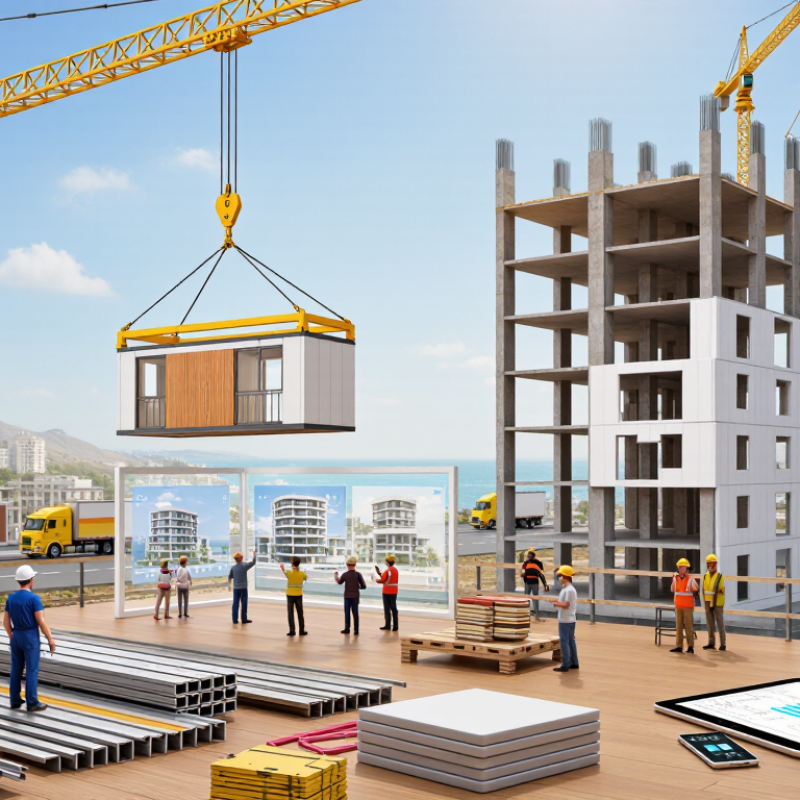
Global buyers need more than a catalog of construction products. They need solutions that fit local codes, climate conditions, budgets, and installation skills. A prefabricated wall system may perform well in a dry climate, but fail when humidity reaches hidden insulation layers. Confirm fire ratings, thermal values, structural loads, and documentation before ordering. Ask for test reports, installation drawings, spare-part plans, and clear warranty terms.
The scale is significant. The United Nations Environment Programme reported that buildings and construction consumed 34% of global energy and produced 37% of energy and process-related carbon emissions in 2022.
This makes energy-efficient envelopes, low-carbon materials, passive cooling, and efficient equipment practical purchasing priorities. Digital coordination also matters. Building information models can reveal clashes between ducts, steel frames, and plumbing before materials enter a 40-foot container. That reduces site delays, although software cannot replace experienced supervision.
Supply reliability deserves equal attention. Buyers should compare production capacity, port routes, packaging methods, inspection procedures, and replacement timelines. A low unit price can become expensive after damaged panels, missing anchor bolts, or unclear customs documents. Industry experience shows that local training often determines whether a technically strong solution performs well. Small details matter.
The weak point is familiar: international buyers sometimes trust brochures more than evidence. That approach needs correction. Use independent inspections, sample installations, verified calculations, and staged payments tied to measurable milestones. Construction solutions should be judged in real weather, on real sites, by real workers.
Top 10 Construction Solutions for Global Buyers
Identifying Project Needs, Site Conditions, and Local Standards
A reliable construction solution begins with the project’s actual purpose, not a product catalogue. Define load requirements, floor area, expected service life, budget, and installation speed. A warehouse near a humid coast needs different protection than a temporary site in a dry inland region. Small details matter. Soil reports, drainage paths, wind exposure, and transport access can change the entire design.
Local standards must guide material selection and engineering documents. Check structural codes, fire performance rules, energy requirements, electrical systems, and worker safety obligations before placing an order. Ask for test reports, technical drawings, installation instructions, and traceable quality records. An experienced supplier should explain assumptions clearly. Vague promises are risky.
Site conditions often expose weaknesses that look invisible on paper. Uneven ground may require adjustable foundations. Heavy rainfall may demand raised floors and wider drainage channels. Limited road access can affect module size and delivery planning. We once underestimated local lifting equipment, creating avoidable delays. That mistake still influences our planning: verify site measurements, permit requirements, labor skills, and inspection procedures with local professionals. Good solutions leave room for field adjustments, because drawings are rarely perfect.
Identifying project needs, site conditions, and local standards before procurement helps reduce redesign, permitting, logistics, and installation risks.
The planning priority index is a normalized 0–100 decision-support scale based on the typical impact of each factor on international construction feasibility. Higher values indicate earlier and more detailed verification is recommended.
Top 10 Construction Solutions for Global Buyers
Comparing the Top Ten Construction Solution Categories
Global buyers often compare ten construction solution categories before approving a supplier. Structural systems provide strength, while modular construction can shorten schedules and reduce on-site labor. Concrete solutions suit foundations and heavy loads, but curing time can affect delivery plans. Steel offers fast assembly, although corrosion protection needs careful inspection. Roofing and façade systems influence energy use, weather resistance, and long-term maintenance.
Plumbing and water systems require accurate pressure testing and compatible fittings. HVAC solutions control temperature, humidity, and indoor air quality, especially in offices and warehouses. Electrical systems must match local codes, voltage requirements, and future equipment loads. Site safety solutions include barriers, access controls, emergency lighting, and documented training. Digital project controls improve drawings, progress tracking, and material records.
The tenth category is project support, including engineering review, installation guidance, spare parts, and warranty response. Strong suppliers provide test reports, product data, and traceable quality records. Buyers should compare total cost, not only the initial quotation. A cheaper façade may need more frequent repairs. A modular unit may save time but require specialized transport. Category boundaries also overlap, which makes comparisons imperfect. In my experience, factory samples rarely reveal every site condition. Soil movement, humidity, and local workmanship can change the result. Independent inspections and small pilot installations can expose these weaknesses before full procurement.
| Rank | Construction Solution Category | Typical Applications | Main Materials or Systems | Typical Construction Speed | Indicative Service Life | Indicative Cost Range | Key Advantages | Main Limitations | Important Buyer Checks |
|---|---|---|---|---|---|---|---|---|---|
| 1 | Reinforced Concrete Structures | Residential buildings, commercial facilities, hospitals, schools and industrial structures | Concrete, reinforcing steel, formwork and structural connectors | Medium; approximately 12–24 months for a medium-sized building, depending on design and site conditions | 50–100 years or more when properly designed, constructed and maintained | Approximately US$900–2,500 per m² for complete building construction; highly dependent on country, specification and finishes | High structural strength, fire resistance, acoustic performance and broad design flexibility | High material weight, longer curing periods and relatively high embodied carbon if not optimized | Concrete strength, reinforcement quality, curing procedures, waterproofing, seismic design and construction tolerances |
| 2 | Structural Steel Framing | Warehouses, factories, offices, high-rise buildings, sports facilities and long-span structures | Hot-rolled or fabricated steel sections, bolts, welds, metal decking and protective coatings | Fast to medium-fast; factory fabrication can significantly shorten on-site assembly | 50–100 years or more with corrosion protection and scheduled maintenance | Approximately US$800–2,200 per m² for complete building construction; structural steel cost alone is substantially lower | High strength-to-weight ratio, long spans, predictable fabrication and easy future modification | Requires fire protection and corrosion control; material prices can fluctuate significantly | Steel grade, connection design, coating system, fire rating, fabrication accuracy and erection capacity |
| 3 | Precast Concrete Systems | Apartment buildings, parking structures, industrial buildings, façades, bridges and infrastructure projects | Factory-produced concrete panels, beams, columns, slabs and structural connections | Fast once production molds are prepared; repetitive projects benefit most | 50–100 years or more with proper detailing and maintenance | Approximately US$850–2,300 per m² for complete building construction, depending on repetition and transport distance | Consistent factory quality, reduced site labor, rapid installation and controlled production conditions | Transport limits, lifting requirements, connection detailing and reduced flexibility for late design changes | Element dimensions, lifting plan, connection performance, transportation route, tolerances and local installation capacity |
| 4 | Modular and Volumetric Construction | Hotels, worker accommodation, classrooms, healthcare units, housing and temporary facilities | Factory-built three-dimensional modules using steel, concrete, timber or hybrid assemblies | Very fast on site; factory production and site preparation can occur simultaneously | 30–60 years or more, depending on module type, envelope quality and maintenance | Approximately US$1,000–2,800 per m² for completed buildings; logistics and site works can materially affect the total | Shorter site schedule, reduced weather exposure, repeatable quality and lower on-site disruption | Transport dimensions, crane access, module interfaces and limits on customized geometry | Module size, transport permits, lifting sequence, fire and acoustic ratings, utility connections and local approvals |
| 5 | Engineered Timber and Mass Timber | Low- and medium-rise housing, schools, offices, hotels and community buildings | Glulam, cross-laminated timber, laminated veneer lumber, panels, connectors and protective membranes | Fast to medium-fast; prefabricated panels can accelerate assembly | 50–100 years or more when protected from moisture and correctly maintained | Approximately US$900–2,400 per m² for complete building construction, depending on design and local supply | Low structural weight, rapid installation, renewable material potential and reduced foundation loads | Moisture sensitivity, fire detailing requirements, limited local supply in some markets and movement control | Moisture content, fire resistance, connection design, treatment documentation, certification and storage conditions |
| 6 | Masonry and Load-Bearing Block Systems | Housing, boundary walls, low-rise commercial buildings and utility structures | Clay bricks, concrete blocks, mortar, reinforcement and concrete bond beams | Medium to slow; labor productivity and curing requirements strongly affect the schedule | 50–100 years or more with suitable detailing and weather protection | Approximately US$700–1,800 per m² for complete low-rise building construction, excluding unusual ground conditions | Widely available materials, good thermal mass, simple tools and relatively low initial material cost | Labor-intensive installation, lower long-span capability and potential moisture or cracking problems | Block strength, dimensional accuracy, mortar quality, wall reinforcement, damp-proofing and local workmanship |
| 7 | Building Envelope and Insulation Systems | New construction and renovation of residential, commercial and industrial buildings | Insulated panels, mineral wool, rigid foam, membranes, rainscreens, windows and façade cladding | Fast to medium-fast, especially with prefabricated panels and coordinated detailing | 25–60 years for many components; some cladding and membranes may require earlier replacement | Approximately US$120–500 per m² of treated wall or roof area, depending on system and performance level | Improves energy efficiency, indoor comfort, moisture control and building durability | Performance depends heavily on joints, penetrations, installation quality and climate-specific design | Thermal conductivity, fire classification, vapor control, water tightness, air leakage and thermal bridging |
| 8 | Roofing and Waterproofing Solutions | Flat and pitched roofs, terraces, basements, podiums, tanks and below-grade structures | Membranes, roof sheets, tiles, insulation, drainage layers, sealants and protective finishes | Fast to medium-fast; weather conditions and substrate preparation are critical | 15–40 years for many systems, with longer performance possible through regular maintenance | Approximately US$80–300 per m² of roof area, depending on system, insulation and access conditions | Protects the structure from water, supports energy performance and can integrate drainage or solar-ready layouts | Leaks can be difficult to locate; poor detailing at edges, joints and penetrations is a common failure cause | Membrane thickness, seam testing, drainage design, UV resistance, warranty terms and installer experience |
| 9 | Mechanical, Electrical and Plumbing Systems | Residential, commercial, healthcare, industrial and public buildings | Heating and cooling equipment, ventilation, electrical distribution, lighting, water supply and drainage | Medium; installation is usually coordinated with structural and finishing works | 10–25 years for many equipment items; distribution components may last 25–50 years or more | Approximately US$250–900 per m² of building floor area, depending on climate, occupancy and performance requirements | Supports safety, comfort, hygiene, productivity and operational efficiency | High coordination complexity, maintenance needs and potential for significant energy consumption | Capacity calculations, energy performance, fire safety, access for maintenance, spare parts and commissioning records |
| 10 | Road, Drainage and Site Infrastructure | Industrial parks, residential developments, logistics sites, campuses and public infrastructure | Earthworks, aggregates, asphalt or concrete pavement, drainage pipes, culverts, kerbs and utilities | Medium; affected by land conditions, utility relocation, weather and traffic management | 15–30 years for many pavement surfaces; drainage and earthworks can last longer with maintenance | Approximately US$150–1,200 per m² of paved or developed area, excluding major land acquisition and unusual ground treatment | Improves access, stormwater management, site value, safety and long-term operational reliability | Highly dependent on geotechnical conditions, rainfall, traffic loads and maintenance budgets | Soil investigation, drainage capacity, pavement design, compaction testing, utility coordination and flood risk |
Global buyers should evaluate suppliers beyond quoted prices. Verify production capacity, export experience, financial stability, and documented quality procedures. Request project references with similar climates, loads, and delivery distances. A factory visit can reveal storage risks that brochures hide. It is not glamorous, but it matters.
Material selection needs measurable evidence. Compare structural performance, service life, maintenance needs, and embodied carbon. The 2023 Global Status Report for Buildings and Construction states that buildings consume about 30% of global final energy and create roughly 26% of energy-related emissions. Environmental Product Declarations can support clearer comparisons. However, EPD figures may use different boundaries. Buyers should check the underlying product category rules.
Technology should solve a verified site problem. Building information modeling, digital inspection records, modular production, and remote monitoring can reduce coordination errors. Still, advanced software cannot repair weak supervision. Ask for data ownership terms, interoperability, cybersecurity controls, and training records. Then test the workflow on one small package.
Certifications strengthen trust when independent bodies issue them. Review ISO 9001 for quality management, ISO 14001 for environmental systems, and ISO 45001 for occupational safety. Confirm certificate scope, expiry dates, audit findings, and the actual manufacturing site. A certificate is evidence, not proof of every product. Local compliance remains essential, including fire ratings, structural codes, electrical rules, and import documentation. The best evaluation combines reports, samples, audits, and uncomfortable questions. Mistakes still happen. The process should make them visible early.
Sources: International Energy Agency and United Nations Environment Programme, Global Status Report for Buildings and Construction 2023; International Organization for Standardization, ISO Survey 2023.
Top 10 Construction Solutions for Global Buyers
Global construction procurement needs more than low quotations. The OECD reported that public procurement averaged 12.9% of GDP in member economies in 2021. That scale makes weak purchasing controls expensive. Buyers should compare total landed cost, including inspection, inland transport, duties, storage, insurance, and delay exposure. Use clear specifications, staged approvals, and supplier capacity checks before issuing purchase orders. A cheaper product is not cheaper after rework.
Logistics needs equal attention. The World Bank’s Logistics Performance Index 2023 found that an average shipment took 44 days to reach its destination. Build schedules around realistic port, customs, and trucking buffers. Confirm packaging details, document ownership, delivery milestones, and backup routes in writing. Small omissions become large disputes. They do.
Cost risk also requires live monitoring. The OECD has noted that major infrastructure projects frequently experience cost overruns, especially when early estimates ignore design changes and market volatility. Use a cost register with committed, forecast, and contingency values. Review currency movements, material prices, and supplier lead times every week. Dual sourcing can help, but it may increase administration and inspection costs. That trade-off is easy to miss. Field experience shows that dashboards do not replace judgment; one inaccurate quantity can distort an entire procurement plan. Reflect, revise, and document every assumption.