
10 Best Under Construction Signs for Global Buyers
Choosing the right under construction sign is a practical safety decision, not merely a design exercise. Global buyers must consider visibility, language, weather, mounting, and local compliance requirements. A sign beside a dusty road faces different challenges from one inside a bright shopping complex. Wind, rain, glare, and poor lighting can quickly expose weak materials. Small details matter.
Construction safety engineer Fred A. Manuele has emphasized that “safety signs should support hazard controls, not replace them.” This principle should guide every purchase. A warning board cannot replace secure fencing, trained workers, safe walkways, or proper site supervision. It only communicates risk clearly and quickly. That distinction is easy to miss.
This guide reviews 10 best under construction signs for global buyers. It considers standard warning messages, multilingual layouts, high-contrast colors, reflective films, durable substrates, and practical installation methods. Some buyers may prefer inexpensive temporary boards. That choice can fail when sunlight fades the print or strong wind bends the panel. Others may choose oversized signs, yet create visual clutter at crowded entrances.
The strongest option is rarely the most expensive one. It is the sign that remains readable, stable, and appropriate for its exact location. Product claims also deserve careful checking. “Weatherproof” can mean different things across suppliers. Buyers should request test details, material specifications, sample images, and replacement guidance before ordering. This review aims to make that comparison easier, while admitting one limitation: site conditions vary widely, and no universal sign works perfectly everywhere.
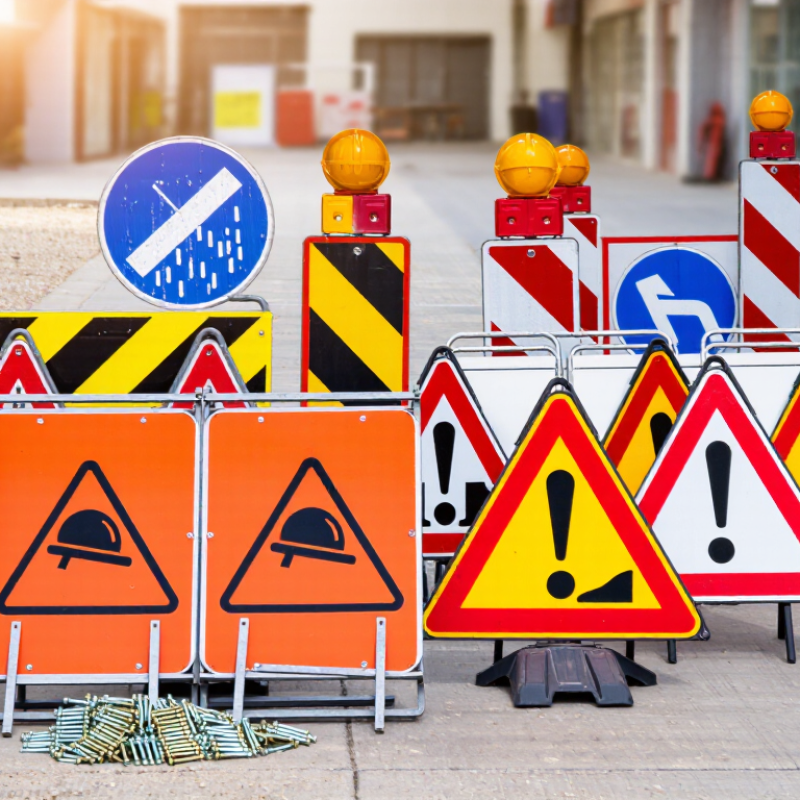
What Under Construction Signs Are and Why Global Buyers Need Them
Under construction signs are temporary safety notices that warn people about active work, changing routes, and potential hazards. They may use bold lettering, high-contrast colors, symbols, reflective surfaces, or multiple languages. A sign beside a dusty entrance can prevent a visitor from entering an unfinished corridor. It also helps workers, delivery drivers, and customers understand what to expect.
Global buyers need these signs because construction conditions change quickly, while visitors may not speak the local language. Clear wording and familiar symbols can reduce confusion at airports, hotels, factories, retail sites, and public projects. Buyers should check sign size, weather resistance, mounting options, print quality, and visibility from a safe distance. Material choice matters too. Rigid plastic suits repeated outdoor use, while lightweight board may fit short indoor projects. In my purchasing experience, a cheap sign often costs more after fading or cracking. That lesson is easy to overlook.
Tips: Request a sample before placing a large order. Test it in rain, dust, and direct sunlight. Confirm translations with a qualified native speaker, not automatic software alone. Ask for production photos and packaging details. Include destination requirements, but do not assume one design fits every market. A bilingual sign may still fail if the text is too small. Reflective graphics can help at night, yet they cannot replace proper lighting or site controls.
10 Best Under Construction Signs for Global Buyers - What Under Construction Signs Are and Why Global Buyers Need Them
| No. | Under Construction Sign Type | Primary Purpose | Typical Size Options | Common Materials | Visibility Features | Typical Installation | Best Use for Global Buyers |
|---|---|---|---|---|---|---|---|
| 1 | Road Work Ahead Sign | Warns drivers that construction activity is approaching. | 600 × 600 mm; 750 × 750 mm; 900 × 900 mm | Aluminum sheet, corrugated plastic, or durable PVC board | High-contrast warning colors and optional reflective sheeting | Temporary posts, portable stands, or roadside frames | General road, bridge, utility, and municipal construction projects |
| 2 | Men at Work Sign | Alerts road users to workers operating near traffic. | 450 × 600 mm; 600 × 900 mm; 750 × 1,000 mm | Aluminum, galvanized steel, plastic board, or flexible mesh | Warning symbol or text with reflective or fluorescent surface options | Ground stakes, cones, barriers, or temporary fencing | Work zones where pedestrian and vehicle awareness is essential |
| 3 | Road Closed Sign | Clearly indicates that vehicles must not enter a specific route. | 600 × 600 mm; 750 × 750 mm; 900 × 900 mm | Aluminum, steel, rigid PVC, or reinforced composite panels | Large lettering, strong contrast, and high-intensity reflective film | Mounted on barricades, posts, gates, or temporary roadblocks | Full road closures, emergency repairs, and major infrastructure works |
| 4 | Detour Sign | Directs traffic toward an alternative route around a work zone. | 600 × 600 mm; 750 × 750 mm; 900 × 900 mm | Aluminum, corrugated plastic, or weather-resistant composite board | Directional arrows, readable lettering, and reflective backgrounds | Portable stands, signposts, traffic barriers, or overhead frames | Projects requiring temporary traffic diversion or route changes |
| 5 | Lane Closed Sign | Informs drivers that one or more traffic lanes are unavailable. | 600 × 600 mm; 750 × 750 mm; 900 × 900 mm | Aluminum, galvanized steel, or impact-resistant plastic | Reflective graphics and highly visible red, black, white, or yellow layouts | Traffic cones, drums, barricades, or temporary posts | Highway maintenance, urban roadworks, and lane management |
| 6 | Slow Traffic Sign | Encourages drivers to reduce speed near construction activity. | 450 × 600 mm; 600 × 750 mm; 750 × 900 mm | Aluminum, flexible plastic, or temporary mesh sign material | Fluorescent yellow-green or orange background with reflective lettering | Portable stands, cones, posts, and mobile work-zone equipment | Approach zones, narrow lanes, active work areas, and temporary crossings |
| 7 | Flagger Ahead Sign | Warns drivers that a trained traffic controller may direct vehicle movement. | 600 × 600 mm; 750 × 750 mm; 900 × 900 mm | Aluminum, rigid plastic, or weather-resistant composite board | High-contrast text or symbol with reflective surface options | Roadside posts, portable frames, or temporary barrier systems | Single-lane traffic control and alternating vehicle movements |
| 8 | Pedestrian Detour Sign | Guides pedestrians safely around blocked sidewalks or entrances. | 300 × 450 mm; 450 × 600 mm; 600 × 900 mm | Aluminum, corrugated plastic, PVC board, or laminated panel | Directional arrows, universal icons, and reflective or fluorescent colors | Pedestrian barriers, fence panels, lamp posts, or portable stands | Urban construction, commercial sites, transit areas, and sidewalk works |
| 9 | Construction Entrance Sign | Identifies designated entry points for construction vehicles, workers, or visitors. | 300 × 450 mm; 450 × 600 mm; 600 × 900 mm | Aluminum, PVC board, steel panel, or rigid composite material | Clear directional wording, arrows, safety icons, and optional reflective finish | Site gates, fencing, access roads, security posts, or wall-mounted brackets | Building sites, industrial facilities, warehouses, and infrastructure projects |
| 10 | Caution: Construction Area Sign | Provides a general warning about hazards within or around an active work area. | 450 × 600 mm; 600 × 900 mm; 900 × 1,200 mm | Aluminum, corrugated plastic, PVC board, or temporary mesh | Bold warning header, hazard pictograms, and weather-resistant printing | Fences, gates, hoarding, barriers, posts, or building entrances | General site safety, visitor control, public access points, and perimeter protection |
Related Posts
-

China Top Construction Projects Suppliers for Global Buyers
-
Why Is Construction Work So Expensive?
-
Why Are Construction Solutions Essential for Global Buyers?
-

2026 Best Construction Project Materials for Global Buyers?
-
2026 Best Construction Site Equipment for Global Buyers?
-
Exploring the Future of Construction Technology in a World Under Construction