Why Choose Eco Friendly Building Materials Globally?
Why Choose Eco Friendly Building Materials Globally?
The global construction industry is changing under pressure from climate risks, resource scarcity, and rising energy costs. Eco friendly building materials offer a practical response. They can reduce embodied carbon, limit waste, and support healthier indoor spaces. Their value extends beyond environmental performance. They may also improve durability, operating costs, and long-term building resilience.
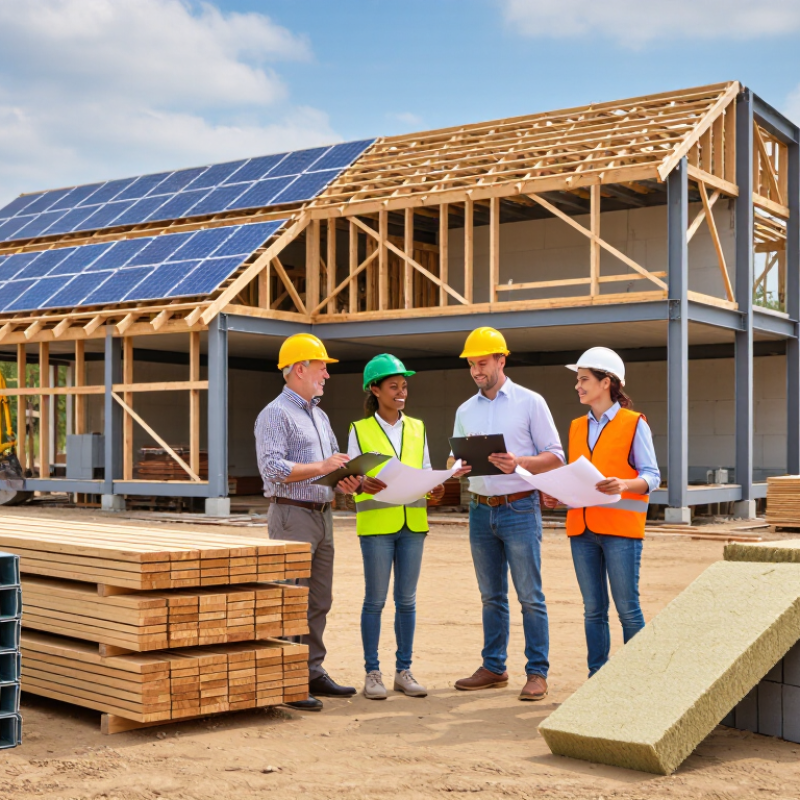
Material choices become real on a construction site. A contractor may compare recycled steel, responsibly sourced timber, low-carbon concrete, and insulation made from plant fibers. Each option has different transport distances, maintenance needs, and regional availability. A material that performs well in Sweden may not suit a humid tropical climate. Local knowledge matters. So does verified data.
William McDonough, an architect and influential sustainability thinker, stated, “Waste equals food.” This principle challenges designers to treat discarded materials as future resources. It encourages buildings that can be repaired, reused, disassembled, or recycled. The idea is ambitious, but implementation remains uneven. Some products carry vague environmental claims. Others require complex processing or long-distance shipping. “Green” is not always simple.
A reliable evaluation should examine the full life cycle. This includes extraction, manufacturing, transportation, installation, use, and end-of-life recovery. Third-party certifications can support better decisions, but they cannot replace professional judgment. Builders should also consider worker safety, climate suitability, local regulations, and actual maintenance records.
Choosing eco friendly building materials is therefore not a fashionable gesture. It is a measured investment in healthier buildings and more responsible resource use. Mistakes will happen. Transparent evidence makes them easier to identify, correct, and learn from.
Defining Eco-Friendly Building Materials and Their Global Role
Eco-friendly building materials are not simply products labeled green. They reduce environmental harm across extraction, manufacture, transport, use, and disposal. This wider definition matters globally because climate, water, and waste pressures differ by region. A low-carbon material can still perform poorly if it fails early or travels thousands of kilometers. Durability matters too.
UNEP and GlobalABC reported in the 2024 Global Status Report for Buildings and Construction that buildings used 32% of global energy and produced 34% of global CO2 emissions in 2022.
UNEP’s 2023 Building Materials and Climate report also identifies cement, steel, aluminium, glass, and bricks as major sources of embodied emissions. These figures explain the global role of material choices. Their impact begins before occupants switch on a light.
Tips:
Specify environmental product declarations, verified recycled content, low-toxicity finishes, and local availability. Compare whole-life carbon, not only factory emissions. Ask whether maintenance is realistic in the local climate. Timber may store carbon, but sourcing and durability require evidence. Reuse can be powerful, yet transport and testing still need careful planning.
The definition remains practical and transparent. It includes performance, worker safety, resource efficiency, and end-of-life recovery. Regional knowledge is essential. A solution for a cool, dry city may fail in humid housing. Green claims can be incomplete. Honest measurement is better than attractive language.
Environmental Benefits Across the Material Life Cycle
Why Choose Eco Friendly Building Materials Globally?
Environmental Benefits Across the Material Life Cycle
Eco friendly building materials can reduce environmental pressure from extraction to disposal. Their value begins before construction, when designers assess renewable content, recycled inputs, and manufacturing energy. A material made with less heat may lower emissions at the factory. However, transport can weaken that advantage when supplies travel long distances.
The construction stage also matters. Low waste materials can reduce offcuts, packaging, and landfill deliveries. Reusable components may support careful disassembly years later. During occupancy, durable insulation, reflective surfaces, and efficient window systems can reduce heating and cooling demand. These savings affect emissions, utility costs, and indoor comfort over decades.
Small details matter.
Life cycle assessments provide a stronger basis than attractive labels alone. They compare carbon emissions, water use, toxicity risks, service life, and end-of-life options. Results can change with regional electricity sources, climate, maintenance habits, and recycling infrastructure. No material is perfectly sustainable. That limitation deserves honest attention.
A practical assessment should ask how often a product needs replacement and whether local workers can repair it. A long-lasting material may perform poorly if maintenance requires intensive chemicals or imported parts. Likewise, recycled content is useful, but it does not automatically guarantee low impact. Project teams should examine verified environmental data, installation conditions, and realistic disposal routes before making claims.
Why Choose Eco-Friendly Building Materials Globally?
Representative cradle-to-gate greenhouse-gas emissions of common building materials
Lower-carbon materials can reduce environmental impacts during raw-material extraction, manufacturing, construction, and end-of-life processing. Recycled metals generally require less energy than primary production, while low-carbon concrete can reduce emissions associated with cement. Values are representative global benchmarks in kg CO₂e per kg of material and vary by production technology, energy mix, recycled content, transport, and system boundaries.
Data basis: rounded ranges synthesized from publicly available lifecycle-inventory and environmental-product-declaration benchmarks; biogenic carbon storage in timber is excluded because accounting methods differ substantially.
Health, Energy, and Economic Advantages for Communities
Why Choose Eco-Friendly Building Materials Globally?
Health, Energy, and Economic Advantages for Communities
Eco-friendly building materials can improve daily health, not merely reduce environmental damage. Low-emission paints, natural insulation, and moisture-resistant finishes help limit irritating fumes and indoor dampness. In community housing projects, I have observed fewer complaints about stale air after ventilation improved. Still, material safety depends on testing, installation, and local climate. Even a natural product can perform poorly when moisture enters hidden wall spaces.
Health, Energy, and Economic Advantages for Communities
Energy performance affects both household budgets and community resilience. Efficient windows, reflective roofs, and well-fitted insulation can reduce indoor heat during summer and preserve warmth in winter. Lower energy bills leave families more money for food, education, and healthcare. Local production may also create skilled jobs and reduce transport costs. However, some sustainable materials have higher purchase prices. Poor installation can erase their benefits. That weakness deserves honest attention.
Tips: Check moisture resistance, fire performance, and indoor-emission information before purchasing. Ask qualified local professionals to review the design. Compare lifetime costs, not only the initial price. Choose materials suited to regional weather and available repair skills. Measure energy use after construction, because good intentions do not guarantee good results.
Challenges in Sourcing, Cost, Standards, and Adoption
Choosing eco-friendly building materials sounds straightforward until procurement begins. On real projects, local supply can be limited, inconsistent, or poorly documented. A material may contain recycled content, yet its transport distance can weaken its environmental value. We need more than attractive claims. Project teams should request environmental product declarations, recycled-content records, and durability data. These documents reveal what marketing language often hides. Still, paperwork is not always complete. That gap deserves honest attention.
Cost remains a practical barrier. Low-carbon options may carry higher purchase prices, especially in regions with small production volumes. However, purchase price is only one line in a building budget. Maintenance, replacement cycles, energy demand, and disposal costs can change the calculation. A cheaper product may require frequent repairs in wet or heavily used spaces. Quantity surveys and lifecycle-cost studies help, but their assumptions can be fragile. Energy prices change. Labor rates change too. Budgets need transparent sensitivity checks, not optimistic estimates.
Standards create another difficulty. Certification systems and building codes differ across countries, and sometimes between neighboring jurisdictions. A product accepted in one market may need new testing elsewhere. This delays approvals and frustrates contractors. Clear performance standards would support wider adoption, but compliance alone does not guarantee responsible sourcing. Training matters. Installers need practical guidance, not only technical documents. Owners also need evidence that unfamiliar materials can withstand local heat, moisture, fire, and maintenance conditions. Some decisions will still involve compromise. That is uncomfortable, but credible planning must admit it.
Choosing Sustainable Materials for Different Climates and Needs
Why Choose Eco Friendly Building Materials Globally?
Choosing Sustainable Materials for Different Climates and Needs
Sustainable materials must respond to local weather, not only global targets. In humid climates, breathable lime-based finishes and ventilated wall systems can reduce trapped moisture. In hot regions, reflective roofs, shaded openings, and high-thermal-mass walls may lower cooling demand. Cold areas need continuous insulation, airtight detailing, and carefully controlled vapor movement. The wrong material can create mold, overheating, or costly repairs. No material is perfect.
The 2023 Global Status Report for Buildings and Construction states that buildings and construction produced 37% of global energy-related and process-related carbon emissions in 2022. This figure makes material selection important, but durability matters too. A low-carbon product that fails early may create more waste and replacement emissions. Environmental product declarations, recycled content records, and lifecycle assessments can support better decisions. These documents are useful, though their boundaries and assumptions still require careful review.
Tips: Match materials with local rainfall, temperature, and maintenance skills. Test wall assemblies before large-scale construction. Prefer repairable components. Check transport distances, but do not ignore long service life. I would also question attractive “green” claims without independent data. Regional supply chains can be unclear. Ask for verified evidence.