How to Source Building and Construction Materials at China Import Expo?

The building and construction industry is vital for global economic growth. The China Import Expo offers significant opportunities for sourcing materials. This prominent event will occur in 2026, focusing heavily on construction-related sectors during the second phase. With over 1.55 million square meters of exhibition space, the possibilities are vast.

Industry expert John Smith states, "Sourcing materials at international trade shows is essential for innovation in building and construction." The integration of AI technology at the expo aims to enhance procurement efficiency. It allows buyers to quickly filter suppliers based on specific certifications, like ISO and CE. The potential for improved sourcing is promising, yet challenges remain in adapting to rapid changes in materials technology.

Attendees must prepare to navigate this expansive venue thoughtfully. Awareness of market trends and emerging technologies is critical. Relying solely on traditional sourcing methods may lead to missed opportunities. Embracing the shift towards AI-driven navigation can offer valuable insights for stakeholders in the building and construction field.

How to Source Building and Construction Materials at China Import Expo?

Understanding the China Import Expo: An Overview for Sourcing Materials

The China Import Expo is a significant event for sourcing building and construction materials. It features a wide range of exhibitors from various sectors. Navigating such a large venue can be overwhelming. Attendees often lose track of valuable opportunities. A clear plan is essential.

Researching beforehand is crucial. Familiarize yourself with the layout and key zones related to construction materials. Some booths may have standout products, but you need to find them first. Consider what specific materials you need. Concrete, steel, or sustainable options? Each requires different suppliers and contacts.

Engaging with suppliers is only part of the process. Take notes on their offerings and ask relevant questions. This interaction often reveals insights that you didn’t anticipate. Be prepared for language barriers or differences in business practices. Miscommunication can lead to misunderstandings. Stay patient and clear in your demands. There’s a lot you can learn from this experience, even when things don’t go as planned.
Construction Material Sourcing at China Import Expo

Identifying Key Building and Construction Material Suppliers at the Expo

Attending the China Import Expo is a great opportunity for sourcing building and construction materials. To find the right suppliers, one must focus on key aspects. Begin by identifying which materials are essential for your projects. This clarity helps narrow down potential suppliers.

Explore various booths and engage with representatives. Communication is vital. Ask questions about product quality, pricing, and delivery times. Some suppliers may have impressive displays but lack sufficient stock. It’s important to verify what’s available before making commitments. Take notes on conversations and materials of interest.

Networking can lead to fruitful connections. Many exhibitors may offer samples or promotional materials. Pay attention to smaller suppliers who may offer unique products. Reflect on what aspects of your sourcing strategy work well and which may need adjustment. This adaptability could enhance the efficiency of your procurement process.

How to Source Building and Construction Materials at China Import Expo?

Material Type Supplier Country Estimated Annual Supply (Tons) Certification Contact Method
Cement China 1,200,000 ISO 9001 Email
Steel Japan 800,000 JIS Phone
Reinforced Plastic Germany 600,000 DIN EN Web
Wood Canada 900,000 FSC Email
Glass USA 500,000 ASTM Phone

Effective Strategies for Negotiating Prices and Terms with Suppliers

How to Source Building and Construction Materials at China Import Expo?

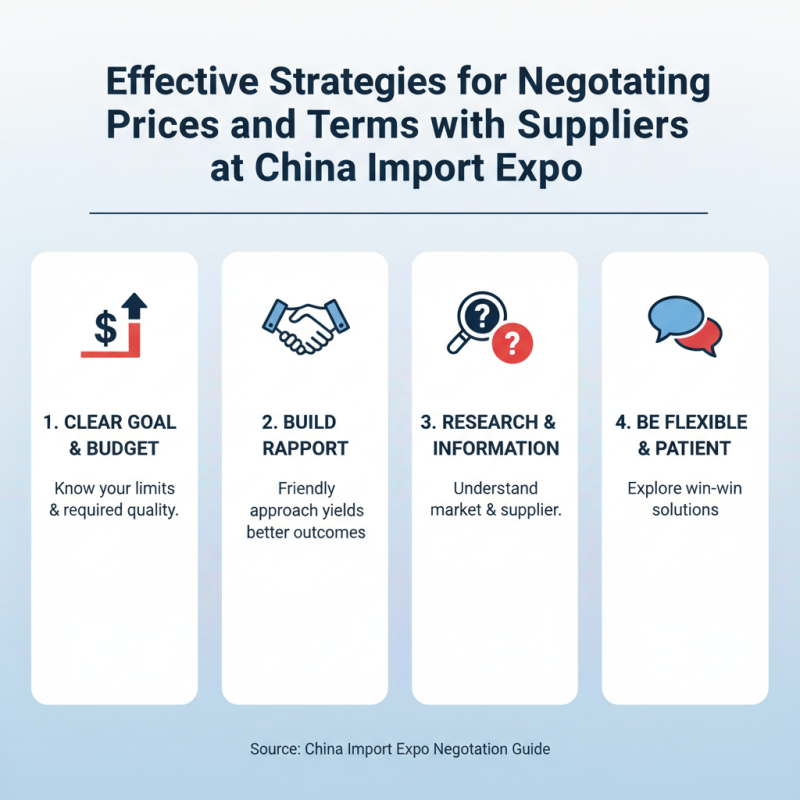
Negotiating prices and terms with suppliers at the China Import Expo can be quite challenging. It’s essential to approach negotiations with a clear goal. Know your budget and the quality of materials you require. Establishing a rapport with potential suppliers can create a better negotiation environment. A friendly approach often yields better outcomes than a confrontational one.

When discussing prices, be prepared to ask open-ended questions. This encourages suppliers to share their reasoning behind pricing. Sometimes, they might offer discounts or flexible payment terms if they see genuine interest. However, it’s crucial to communicate your needs clearly. A vague request may lead to misunderstandings.

Always be ready to walk away if the terms don’t meet your criteria. This helps in maintaining leverage. Keep in mind, not all suppliers will be willing to negotiate. Reflecting on your strategy is vital. If a supplier remains fixated on high prices, consider if it's worth pursuing. Evaluating each interaction will help refine your approach for future discussions.

Logistics and Import Regulations for Construction Materials from China

How to Source Building and Construction Materials at China Import Expo?

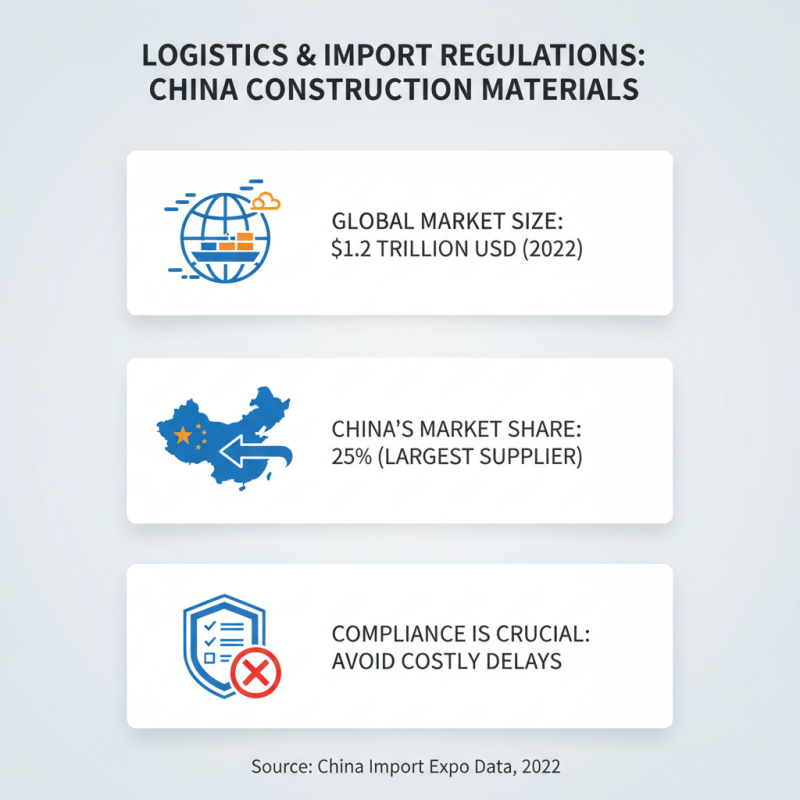
Sourcing building materials from the China Import Expo requires understanding logistics and import regulations. The volume of construction materials imported globally reached approximately 1.2 trillion USD in 2022. China remains the largest supplier, with a 25% market share. Knowing the compliance regulations is crucial to avoid costly delays.

Logistics plays a vital role in the import process. Efficient transportation routes are essential. The global shipping container shortage has affected import timelines. Companies need to plan ahead and secure shipping space early. Moreover, customs procedures can be complex. Documentation must be accurate, or shipments can face fines or detainment. Unexpected customs inspections can cause additional delays, affecting project timelines.

Import regulations also vary significantly from product to product. Some materials may require quality certifications, while others could face tariffs. Industry reports suggest that non-compliance can lead to penalties upwards of 20%. Professionals should regularly update themselves on these regulations to ensure compliance. Missteps in sourcing can lead to increased costs and project setbacks. Active management in this area makes a difference.

Post-Expo Follow-Up: Building Relationships with Your Suppliers

Building relationships with your suppliers after attending the China Import Expo is essential. It’s not just about making a purchase. It’s about creating a network of trust and communication. Start by reaching out with a follow-up email. Express your gratitude for their time and insights during the expo. A personal touch can make your message stand out.

Consider scheduling a video call to discuss your needs further. Face-to-face communication can often build stronger ties. During the call, ask questions about their products and services. Listen actively. This will help you understand their offerings better. Don’t hesitate to mention any concerns or uncertainties you have. This transparency can lead to fruitful discussions.

Building relationships also means maintaining contact. Regular updates about your projects can keep the connection alive. Share your feedback about their products. Suppliers appreciate hearing how their materials perform in real-world applications. They may offer additional resources or innovations in response. Remember, it’s a two-way street. Cultivating these connections may take time, but it’s worth the investment. Keep in mind that not every attempt will yield immediate results. Reflect on the interactions to strengthen future communications.