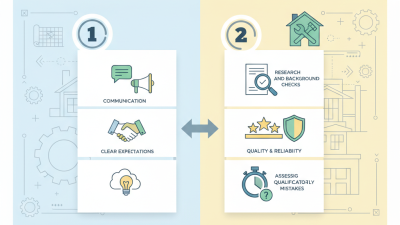
Construction firms turn architectural plans into functioning homes, offices, roads, and public spaces. Their work may include design coordination, permitting support, site preparation, structural construction, and final inspections. Some firms manage the entire project, while others specialize in electrical systems, concrete, roofing, or interior finishes. Understanding this difference helps buyers compare services accurately.
The right choice depends on more than a polished website or a low quotation. Buyers should review completed projects similar to their own. A recent site visit can reveal workmanship that photographs hide. Ask for current licenses, insurance details, safety procedures, and clear evidence of relevant experience. Speak with previous clients about punctuality, communication, cost changes, and defect repairs. Details matter. A reliable firm explains its schedule, payment stages, materials, and responsibilities in writing.
Trust should develop gradually.
Professional construction firms welcome practical questions and identify risks before work begins. They should explain how weather, supply delays, or design changes could affect the budget. Buyers can also compare several detailed quotations instead of choosing the cheapest figure. However, even careful selection cannot remove every construction problem. Delays happen. Misunderstandings happen too. A contract with measurable milestones and documented approvals can reduce confusion, but it cannot replace active communication. Local building requirements also vary, so buyers should confirm important information with qualified professionals or relevant authorities. The strongest decision combines evidence, technical judgment, and realistic expectations. This approach protects the project, the budget, and the relationship between buyer and contractor.

A construction firm is a business that organizes people, materials, and equipment to build, renovate, or repair structures. Its team may include project managers, site supervisors, skilled tradespeople, and administrative staff. The firm might handle a whole project or only specific tasks, such as framing, concrete work, or interior finishes. The name alone does not tell buyers what services are included. The label is broad, and sometimes confusing.
During a project, a firm may prepare schedules, coordinate trades, order materials, and check work against drawings and agreed specifications. A supervisor might review a wall layout before installation or inspect a delivery for damage. Some firms provide design services; others build from plans supplied by the client. Responsibilities depend on the written scope, so buyers should clarify who manages permits, site safety, changes, and cleanup. Even a detailed plan can miss something. That is worth discussing early.
Tips: Ask for a written scope, timeline, payment schedule, and change-order process. Check relevant licenses, insurance, safety practices, and references for similar work. Request a clear explanation of who will be on site each day. If an answer feels vague, ask for a specific example.
Construction firms coordinate the work that turns drawings into usable buildings, roads, and infrastructure. Their services often include feasibility reviews, budgeting, design coordination, permits, procurement, site preparation, structural work, electrical systems, plumbing, finishing, and post-project maintenance. Some firms manage the entire project, while others provide specialist trade services.
The scale is substantial.
The U.S. Census Bureau reported that construction spending exceeded 1.9 trillion dollars in 2023. That volume makes professional coordination valuable, especially when several trades share one site. A capable firm should explain its schedule, payment stages, insurance coverage, safety procedures, and change-order process in plain language. Ask for comparable project evidence, not polished promises. Visit a completed site if possible.
Safety deserves close attention.
The U.S. Bureau of Labor Statistics recorded more than 1,000 fatal work injuries in construction occupations during 2023. Buyers should ask how a firm handles training, inspections, protective equipment, and subcontractor oversight.
A written quality plan also matters. It should identify materials, inspection points, and responsibility for repairs. Cost is important, but the lowest quote can hide missing allowances or weak supervision. No firm is flawless. I would still expect clear records, realistic timelines, and prompt answers when plans change. Procurement may look simple on paper. It rarely is.
Construction firms differ mainly in their scope, contract structure, and the work they perform directly. A general contractor coordinates trades, deliveries, site safety, and inspections for a complete building project. On a small renovation, that could mean scheduling carpenters, electricians, and plumbers around one narrow hallway. Specialty contractors focus on specific work, such as concrete, roofing, electrical systems, or heating and ventilation. Their technical knowledge may be deeper, but buyers might need to coordinate several firms. Not always obvious. These categories can overlap, which sometimes makes comparisons harder.
Design-build firms provide design and construction services under one agreement, potentially reducing handoffs. Buyers should still check how design choices, cost updates, and changes are recorded. Construction managers handle planning, budgeting, and coordination; depending on the contract, they may advise the owner or hold trade contracts. Civil and infrastructure firms build roads, drainage networks, bridges, and utilities, often using different equipment and schedules than building contractors. Look for recent projects similar in size and materials, not only polished photos. Ask who supervises the site each day, which trades are subcontracted, and how delays are reported. A firm can sound capable in a meeting; the assigned project team matters more. Even strong references may not reveal every mismatch.
Construction firms can be grouped by their typical role or project focus. Each colored segment marks a defining role; the bar totals are not rankings or market-share figures.
General contractors coordinate projects; design-build firms combine design and construction; specialty contractors focus on a trade; heavy civil firms build infrastructure; and residential contractors focus on housing. Categories can overlap, and individual firms may offer additional services.
Choosing a construction firm requires more than comparing bid totals. Buyers should inspect recent project evidence, licensing records, insurance coverage, and financial stability. Ask for references from projects similar in size and complexity. A firm that builds luxury homes may not manage a warehouse efficiently. Experience must fit the work.
Safety and staffing deserve close attention. The 2024 Construction Workforce Shortages Survey reported that 94% of firms struggled to fill open positions. This shortage can affect supervision, workmanship, and schedules. Ask who will lead the site each day. Request the supervisor’s name, experience, and communication routine. A low price means little if crews change weekly.
Schedule control is another practical test. KPMG’s 2023 Global Construction Survey found that 82% of respondents had experienced project delays, while 37% reported cost overruns. Buyers should request a detailed program, payment schedule, change-order process, and risk register. Avoid vague promises. Require written explanations for allowances and exclusions. I would also speak with subcontractors when possible. They often reveal coordination problems earlier than formal reports. No firm is perfect. My own judgment can be biased by a polished presentation, so I would compare documents, site conditions, and references before signing.
When comparing construction firms, look beyond the lowest bid. Ask each firm to price the same scope, including site preparation, materials, waste removal, and cleanup. A proposal that omits these details may look cheaper but lead to costly changes later. Compare timelines, payment stages, warranty terms, and who will supervise the work. Details matter.
Check that each firm has relevant experience with projects of similar size and complexity. Ask for recent references, then ask past clients about communication, schedule changes, and how defects were handled. Review sample contracts and confirm that insurance coverage is current. If possible, visit a completed project or an active site. A tidy proposal is useful, but it cannot prove how a crew works day to day. No comparison is perfect; unclear assumptions can slip through, so request written answers before signing.
Tips: Make a simple side-by-side table. Mark exclusions clearly. Ask who handles delays and change requests. Trust specific answers over vague promises. A rushed choice can feel efficient, but it may leave important questions unanswered.
Use this suggested 100-point framework to compare firms bidding on the same project scope. Adjust the weightings to suit the project, and verify qualifications, insurance, references, and contract terms before making a decision.
| Evaluation dimension | Suggested weight | What buyers should assess | Evidence to request or verify | How to compare firms |
|---|---|---|---|---|
| Relevant project experience | 20 points | Experience with similar project types, size, complexity, site conditions, and delivery methods. | Project summaries, client references, and examples of completed work with comparable scope. | Give higher scores to directly comparable projects and clearly documented outcomes, rather than experience that is only broadly similar. |
| Price and cost transparency | 20 points | Whether the price covers the requested scope and clearly identifies allowances, exclusions, assumptions, taxes, and potential extra costs. | Itemized proposal, pricing schedule, scope statement, allowances, exclusions, and payment schedule. | Compare like-for-like scopes. Ask each firm to clarify gaps; do not treat the lowest headline price as the lowest total cost. |
| Schedule and project planning | 15 points | Realism of the proposed start date, milestones, completion date, sequencing, and approach to delays. | Project schedule, key milestones, staffing plan, and written explanation of schedule assumptions. | Compare the same milestones and assumptions, including how the firm plans to manage dependencies and communicate schedule changes. |
| Licensing, insurance, and compliance | 15 points | Whether the firm and relevant trades meet requirements that apply to the project’s location and scope. | Current license details where required, certificates of insurance, and information on required permits and inspections. | Confirm documents with the relevant issuing bodies or insurers when appropriate; requirements vary by jurisdiction and project. |
| Safety and quality management | 10 points | How the firm plans to manage job-site safety, workmanship, inspections, and correction of deficiencies. | Written safety procedures, quality-control process, inspection plan, and examples of issue-resolution procedures. | Look for clear, project-specific processes and confirm who is responsible for inspections and corrective work. |
| Project team and subcontractor management | 8 points | Experience and availability of the proposed project lead, site supervisor, and key trades. | Team roles, relevant qualifications or experience, communication responsibilities, and subcontractor plan. | Compare the named team and its availability, not only the firm’s general reputation or company-wide experience. |
| Communication and contract clarity | 7 points | Responsiveness, reporting arrangements, decision-making process, change-order procedure, and clarity of contract terms. | Sample progress report, communication plan, draft contract, and written change-order process. | Assess whether responsibilities, approvals, payment terms, dispute steps, and changes to scope are clearly documented. |
| References and past performance | 5 points | Reliability, communication, schedule and budget management, and how issues were handled on completed projects. | Recent client references for comparable work and permission to contact those references. | Ask each reference the same questions and consider both the final result and the firm’s response when challenges arose. |
| Total suggested weight | 100 points | Score each dimension consistently, then multiply each rating by its weight to create a comparable weighted result. | ||