How to Excel in Building Construction Techniques and Best Practices?

In the world of building construction, excellence is not just about applying techniques; it is an art. Renowned expert John Smith noted, "Success in building construction hinges on innovation and adaptability." His words resonate in a field where challenges are constant.

Achieving excellence in building construction requires a keen understanding of various techniques and best practices. While adhering to safety and quality, professionals must also embrace technology. This blend often leads to awkward situations, where the untrained eye may miss critical flaws. Relying solely on traditional methods can stifle progress and lead to costly mistakes.

Moreover, building construction is an evolving landscape. Mistakes can illuminate areas needing improvement. Adapting to new materials, designs, and technologies is crucial. Embracing continuous learning can help professionals navigate the complexities of this industry. Recognizing that perfection is unattainable allows for growth and innovation. Emphasizing improvement, rather than being deterred by failure, fuels future success in building construction.
How to Excel in Building Construction Techniques and Best Practices?

Understanding the Fundamentals of Building Construction Techniques

Building construction is a complex process that requires a solid understanding of various techniques. It involves multiple stages, from planning to execution. Knowing how to manage these stages is vital. Good planning can make the difference between success and failure in a project.

One important technique is the use of sustainable materials. These materials not only reduce environmental impact but also enhance durability. However, the choice is not always straightforward. Some sustainable options may be more expensive or difficult to source. This requires careful consideration and balancing budgets with eco-friendly choices.

Another key aspect is effective communication among team members. Miscommunication can lead to mistakes, delays, and increased costs. Regular meetings and clear guidelines can often help but may not fully eliminate issues. Every project likely faces challenges that reveal areas for improvement. Reflecting on these challenges can pave the way for better techniques in future constructions.
Key Best Practices for Efficient Project Planning and Management

Efficient project planning and management are crucial in building construction. Clear communication among team members is essential. Regular meetings can help keep everyone on the same page. Tasks should be delegated based on team members' strengths. This approach can minimize misunderstandings that often lead to mistakes.

Time management plays a significant role as well. Delays in one phase can impact the entire project. Using a timeline to set deadlines can help track progress. However, not all delays can be avoided. Weather issues and supply chain problems often disrupt schedules. Being proactive in addressing these challenges can make a difference.

Moreover, staying within budget is vital for a successful project. Accurate cost estimation helps avoid overspending. Yet, unexpected expenses frequently arise. It’s wise to create a contingency fund. This can alleviate stress when financial surprises occur. Reflecting on past projects helps improve future planning. Learning from mistakes is an opportunity for growth in construction management.

Key Best Practices for Efficient Project Planning and Management in Building Construction

Essential Tools and Materials for Successful Building Projects

In building construction, the right tools and materials make a significant difference. Quality tools ensure efficiency. Proper materials guarantee durability. Invest in essential items like hammers, drills, and levels. These tools form the foundation of any project.

Tips: Always check your tools before starting. A simple inspection can prevent delays. Keep a toolkit ready for immediate access. This saves time during critical phases.

When selecting materials, consider the project's requirements. Wood, concrete, and steel each serve specific purposes. Understand their properties and limitations. Sometimes, what seems ideal may not perform as expected. For instance, using low-quality lumber can lead to structural issues. Reflect on your choices to enhance future projects.

Tips: Don't compromise on material quality. A strong foundation starts with the best inputs. Build relationships with suppliers for reliable access to the best materials. Stay open to learning from mistakes. Every setback is a chance to improve.

Safety Protocols and Risk Management in Construction Environments

In construction, safety is paramount. Following proper protocols can prevent accidents and save lives. Workers should always wear helmets and safety goggles. Providing safety training is essential. However, even with protocols, accidents can still occur. Regular drills are important, yet they may be overlooked. Everyone must know emergency procedures.

Risk management is another crucial aspect. Identifying potential hazards should be a priority. This includes assessing site conditions and equipment safety. Daily checks can help, but they often get skipped. Workers might become complacent when routines feel established. Thus, fostering a culture of vigilance is vital.

Moreover, communication plays a key role. Team members should feel comfortable reporting unsafe conditions. Regular meetings can facilitate this, but they can be time-consuming. Not every worker speaks up, even when they notice issues. Encouraging open dialogue is necessary for a safer environment. It's a constant challenge that requires commitment and reflection.

Innovative Construction Methods: Adapting to Modern Challenges

How to Excel in Building Construction Techniques and Best Practices?

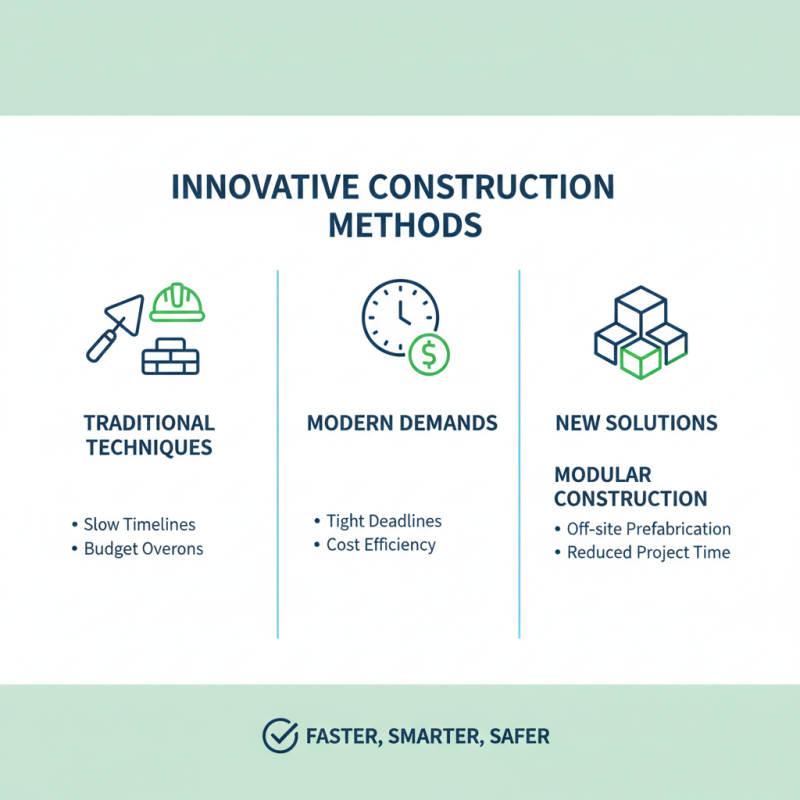
In today's fast-paced world, innovative construction methods are essential. Traditional techniques often struggle to meet modern demands. Building projects face tight deadlines and budget constraints. New methods must address these challenges effectively. For example, modular construction is gaining traction. It allows for prefabrication off-site, reducing overall project time.

Integrating technology is crucial for advancement. Drones and 3D printing are transforming how we approach construction. They enhance accuracy and reduce mistakes. However, not all implementations are smooth. Training workers on new technology is often overlooked. This can lead to frustration and inefficiencies on-site. Projects can experience delays due to a lack of skill.

Sustainability is another pressing concern. Many construction practices still rely on non-renewable resources. This has led to increased scrutiny from regulators and communities. Building with eco-friendly materials is essential but often more costly. Companies must evaluate if the long-term savings outweigh initial investments. Reflections on how to balance innovation and practicality are vital for success.