
Choosing the right residential construction contractors is crucial for your project’s success. According to the National Association of Home Builders (NAHB), nearly 60% of homeowners express dissatisfaction with their contractor choice, often due to poor communication or unmet expectations. Experts emphasize the importance of selecting reliable professionals.
John Smith, a leading authority in the construction industry, states, "The right contractor can turn a vision into reality, but the wrong choice can lead to nightmares." This highlights the delicate balance between trust and transparency. Each decision becomes essential when assessing potential contractors for residential projects.
A comprehensive review of their past work is vital. Look for case studies or customer testimonials. Verify their licenses and certifications to ensure compliance with local regulations. Ultimately, understanding the intricacies of working with residential construction contractors can safeguard your investment and ensure quality outcomes. Real insights can illuminate potential pitfalls, fostering a more informed decision-making process.
Choosing a reliable residential construction contractor is crucial for any building project. Researching potential candidates requires more than a quick internet search. According to a study by the National Association of Home Builders, 90% of homeowners indicate that checking references plays a key role in their decision-making process. Gathering information from previous clients helps to verify the contractor's credibility and quality of work.
Understanding contractor credentials is equally important. Ensure they hold proper licenses, insurance, and certifications. A reputable contractor should provide proof of liability insurance and workers' compensation. This safeguards you from potential liabilities. The Better Business Bureau reports that contractors without proper insurance pose a risk, leading to increased stress and financial loss.
Online reviews can offer insights, but they should be viewed critically. Not all reviews are genuine. Some contractors may engage in practices to manipulate ratings. It is wise to compare reviews across multiple platforms. Personal referrals can be gold, but they should not stand alone. Always perform thorough research. Taking these steps helps mitigate risks while ensuring the contractor aligns with your project's needs and standards.
When selecting residential construction contractors, experience and specialization are critical factors. A contractor’s years in the industry can often indicate their reliability. According to the National Association of Home Builders (NAHB), experienced contractors are less likely to encounter major construction errors, which can save homeowners significant money. Many seasoned contractors have seen various project types, from renovations to custom builds.
Evaluating a contractor's specialization is equally important. Some contractors excel in specific areas, like eco-friendly homes or luxury residences. Research shows that 48% of homeowners prefer contractors who specialize in the type of construction they need. This specialization often leads to a more efficient process and higher quality results. Ensure that the contractor’s expertise aligns with your vision.
Tips: Check if the contractor has relevant certifications. Look for recent projects similar to yours. Client testimonials can also provide insights into their reliability. Finally, visit completed sites to assess workmanship firsthand. A personal visit can reveal much about a contractor’s attention to detail and overall quality.
| Contractor Type | Years of Experience | Specialization | Licenses & Certifications | Customer Rating |
|---|---|---|---|---|
| General Contractor | 15 years | Residential Renovations | State License, EPA Lead-Safe Certification | 4.8/5 |
| Specialty Contractor | 10 years | Electrical Works | Master Electrician License | 4.5/5 |
| Project Manager | 12 years | Project Oversight | Project Management Professional (PMP) | 4.7/5 |
| Roofing Contractor | 8 years | Roof Installation & Repair | State License, Manufacturer Certifications | 4.6/5 |
| Plumbing Contractor | 20 years | Plumbing Installations & Repairs | Licensed Plumber | 4.9/5 |
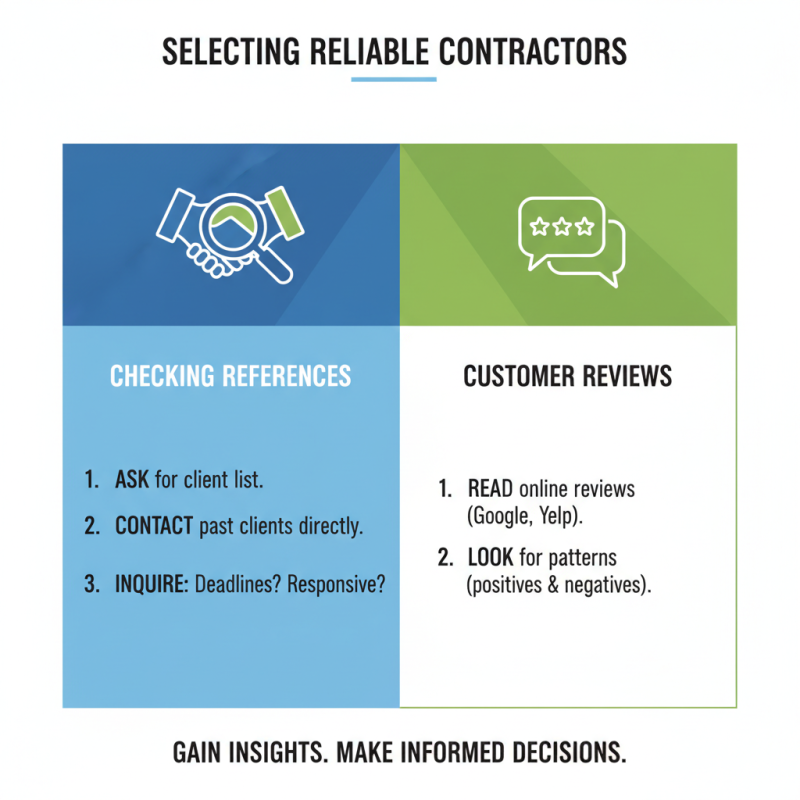
When selecting reliable residential construction contractors, checking references and customer reviews is crucial. Begin by asking potential contractors for a list of past clients. Reach out to these clients directly. Inquire about their experiences. Did the contractor meet deadlines? Were they responsive to concerns? Listening to firsthand accounts can reveal valuable insights.
Online customer reviews can also provide a broader perspective. Websites often list customer feedback and ratings. Look for patterns in reviews. Consistent praises or complaints can indicate reliability. However, keep in mind that not all reviews are impartial. Some may be overly positive or harsh. Approach each review critically, assessing its context and authenticity.
In your research, notice if contractors provide sample projects. Photographs and success stories can bolster their credibility. Yet, don’t ignore the negative feedback. Learning how a contractor handled challenges is just as telling. A reliable contractor should show a willingness to address issues, reflecting their professionalism and accountability.
Understanding contract terms and payment structures is vital in hiring reliable residential construction contractors. Contracts outline the expectations for both parties. They define scope, timelines, and responsibilities. Different types of contracts exist, such as fixed-price and cost-plus agreements. Familiarizing yourself with these can prevent misunderstandings down the road.
Payment structures are equally important. Many contractors require a deposit before starting work. This upfront cost can vary widely. Be cautious with large deposits; they can indicate potential risks. A milestone payment schedule is often safer. It aligns payments with project progress, ensuring quality at each stage. Review the payment terms carefully. Ensure there's clarity on what triggers each payment.
Documentation plays a critical role. Keep copies of all agreements and invoices. These documents can protect your interests. Regular communication with the contractor is essential. Discuss any changes or delays promptly to maintain a good relationship. It’s not uncommon to encounter unexpected issues. Being proactive can alleviate unnecessary stress during the project.
When selecting residential construction contractors, it's vital to ensure they comply with licensing and insurance requirements. Statistics show that approximately 30% of contractors operate without the proper licenses. This highlights the need for homeowners to verify credentials before hiring any contractor. A licensed contractor usually demonstrates a commitment to industry standards and regulations.
Insurance is another critical factor in contractor reliability. About 60% of construction-related accidents occur on residential job sites. Contractors should carry liability insurance to protect both themselves and their clients. This coverage reflects the contractor’s accountability and professional reputation. Potential clients should request proof of both licensing and insurance to mitigate risks during the construction process.
Relying solely on online reviews or recommendations can be misleading. A contractor might have impressive testimonials but lack necessary qualifications. Homeowners should take the extra step to confirm all credentials. This thorough approach helps ensure a safer construction experience and protects against potential disputes or financial losses.