What is a Building Contractor and What Do They Do?

A building contractor plays a crucial role in the construction industry. They manage projects from start to finish, ensuring all tasks align with the client’s vision. These professionals coordinate between various subcontractors, suppliers, and laborers. Their expertise helps turn blueprints into reality.

The work of a building contractor involves various responsibilities. They estimate project costs and timelines, select materials, and oversee site safety. Yet, challenges arise frequently. Communication gaps and unexpected delays can cause frustration. A successful contractor must remain flexible and solution-oriented.

Understanding the building contractor's role is essential for anyone involved in construction. They are not just managers; they are problem solvers. Their knowledge can significantly influence a project’s success or failure. Ultimately, choosing the right building contractor can lead to a successful build or a troubling experience.

What is a Building Contractor and What Do They Do?

Definition and Role of a Building Contractor
What is a Building Contractor and What Do They Do?

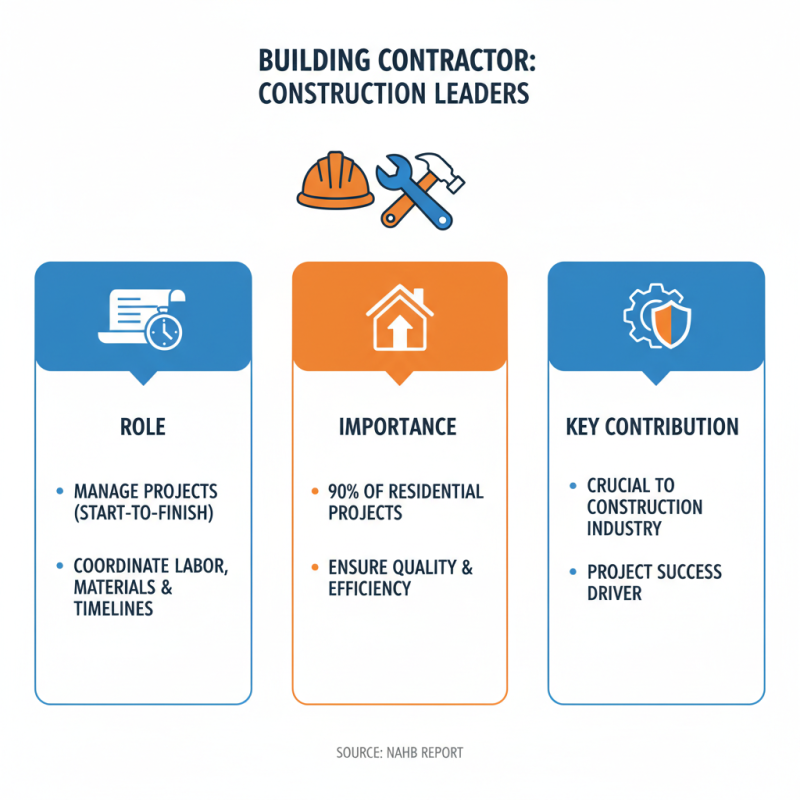
A building contractor is a crucial figure in the construction industry. They manage projects from start to finish. Their role involves coordinating various elements of construction, including labor, materials, and timelines. According to a report by the National Association of Home Builders, 90% of builders rely on contractors for residential projects. This highlights their importance in ensuring quality and efficiency in construction.

Building contractors oversee everything. They hire subcontractors, schedule inspections, and manage budgets. Often, unexpected challenges arise. A contractor must address issues quickly. For example, delays in materials can set back a project. An effective contractor communicates well with clients and workers. They build trust through transparency about costs and timelines.

**Tips:** Always check a contractor’s credentials. Verify licenses and insurance. Clear communication is vital for project success. A good contractor should offer regular updates. Document everything to prevent misunderstandings. Planning is essential, but flexibility is equally necessary. Embrace the unexpected; learn from each project.
Types of Building Contractors and Their Specializations

Building contractors play a crucial role in the construction industry. They can specialize in various areas. Each type focuses on specific projects and methods. Residential contractors build homes. They work closely with homeowners, guiding them through the process. Commercial contractors handle larger structures, like offices and retail spaces. They often face tighter deadlines and bigger budgets.

Another category is specialty contractors. These professionals focus on specific tasks, such as electrical or plumbing work. In fact, nearly 70% of all construction projects require specialty contractors. Their expertise ensures quality and compliance with regulations. However, managing multiple contractors can lead to communication gaps, causing delays.

General contractors oversee the complete project. They coordinate schedules and manage budgets. Sometimes, general contractors lack specialized skills. This can result in costly mistakes. Balancing quality and cost-effectiveness remains a challenge in the industry. Data shows that projects with clear communication have a 30% higher success rate. This indicates the importance of understanding each contractor's role.

Key Responsibilities of a Building Contractor in a Project

What is a Building Contractor and What Do They Do?

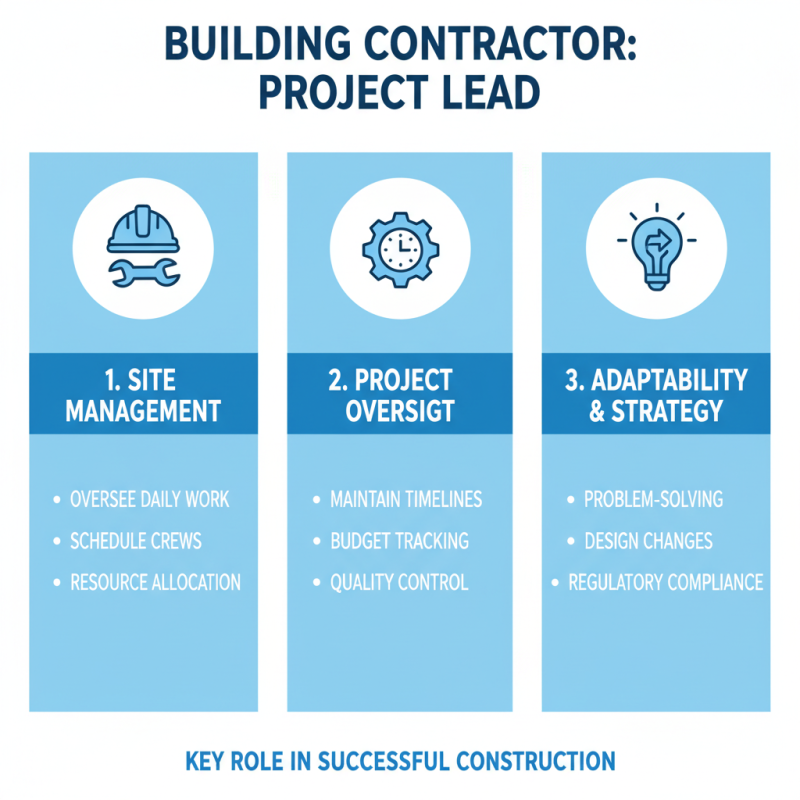
A building contractor plays a critical role in any construction project. They manage various aspects to ensure the project runs smoothly. Their responsibilities can vary significantly based on project size and scope. One key duty is overseeing daily operations on the construction site. This includes scheduling workers, managing resources, and adhering to timelines. A successful contractor must stay organized and adaptable to changes.

In addition, communication is essential. Building contractors frequently interact with clients, architects, and sub-contractors. They must convey project updates and address any concerns. Miscommunication can lead to delays or budget overruns. Moreover, a contractor needs to monitor the quality of work. Ensuring that building codes and project specifications are met is crucial.

Budget management is another critical aspect. Contractors must track expenses and manage payments to ensure profitability. Sometimes, unexpected costs arise. Being prepared for financial challenges is important. Striking a balance between high-quality work and cost-efficiency can be tricky. Persistent attention to detail and problem-solving skills are vital in navigating these hurdles.

Contractor-Focused Regulations and Licensing Requirements

Navigating contractor-focused regulations can be complex. Each state has its own licensing requirements. Understanding these laws is crucial for any building contractor. These rules ensure that contractors operate safely and ethically. They also help protect clients from potential harm.

Licensing often involves various assessments and background checks. Contractors may need to demonstrate their skills and knowledge. Some states require specific insurance, bonding, or experience levels. Not having the proper licenses can lead to fines or legal issues. Some contractors might take shortcuts, thinking it won't matter. Eventually, this risks their reputation and client trust.

Maintaining compliance requires ongoing education and awareness. Contractors must stay updated on rules that may change. Ignoring this can put projects at risk, resulting in delays. With careful attention, contractors can establish a solid foundation for their business. However, failing to adhere to regulations is a common misstep. This can have lasting consequences for their careers and clients.

How to Select the Right Building Contractor for Your Project

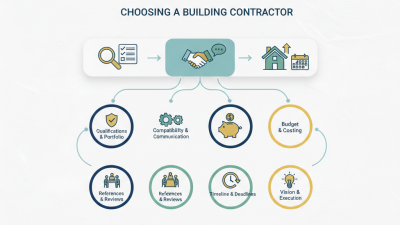
Selecting the right building contractor for your project is crucial. A poor choice can lead to delays, budget overruns, and unsatisfactory results. According to the National Association of Home Builders, quality contracting can influence a project's success by up to 80%. Research is vital. Start by checking online reviews and getting referrals from friends or family.

Tips: Always interview at least three contractors. Ask them about their previous projects. A reputable contractor should provide references and have a solid portfolio. Don't hesitate to ask tough questions. Understand how they handle challenges.

Verify licenses and insurance. A contractor without proper credentials can cost you dearly. The Small Business Administration highlights that construction issues often stem from unlicensed workers. Keep communication open and set clear expectations from the start. Documentation is key. Although it may seem tedious, a written agreement protects both parties.

Tips: Look for transparent pricing. A vague estimate may hide additional costs. Discuss payment schedules upfront to avoid misunderstandings later. Remember, while cost matters, it's not the only factor. The cheapest option might lead to regrets down the road. Prioritize experience and reliability over price alone.