
Aluminum Sliding Glass Doors can bring daylight, wider views, and easier access to a patio or balcony. Their slim frames often leave more glass visible than bulkier designs. But appearance is only part of the decision. Track quality, panel weight, glazing, weather seals, and installation all affect daily use. A beautiful door that sticks after a rainy season is not a good choice.
This guide looks at seven strong options and explains what sets each apart. It considers frame construction, glass performance, security features, customization, maintenance, and overall value. Not every model suits every opening or climate. A coastal home, a cold region, and a compact apartment may need different features. Check the manufacturer’s current specifications, warranty terms, and available sizes before comparing prices. If possible, inspect a working display model; the handle, rollers, and closing feel can reveal details a brochure cannot. Small details matter.
A polished product page can still leave questions unanswered. For example, published performance figures may depend on the glass package or installation method. Measure the opening carefully, and ask a qualified installer to confirm what your home can support. The “best” option is the one that balances smooth operation, dependable sealing, suitable energy performance, and a realistic budget. This overview offers a practical starting point, not a substitute for project-specific advice.
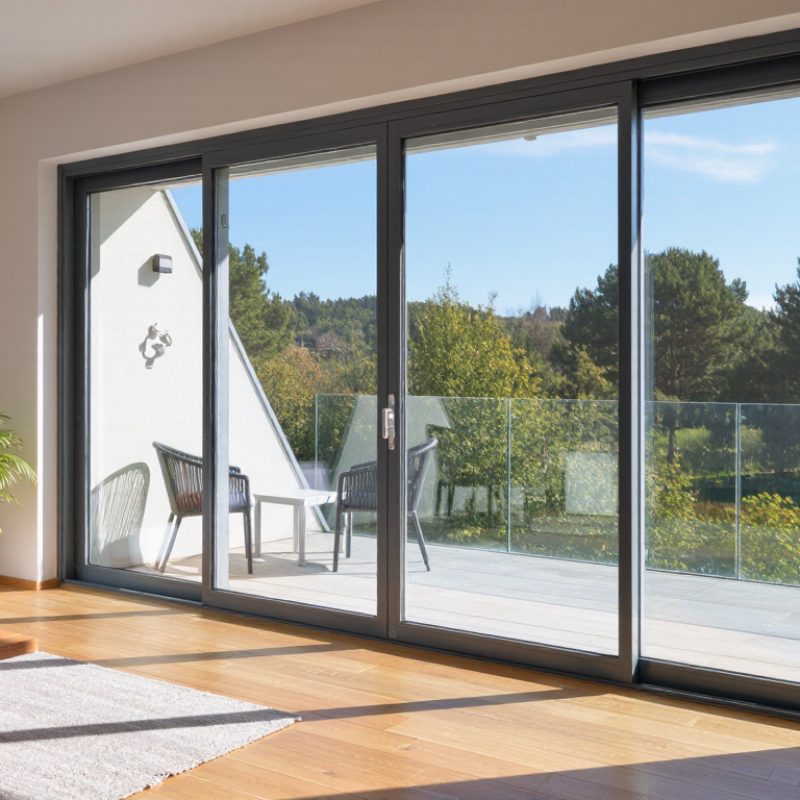
What Are the 7 Best Aluminum Sliding Glass Doors?
Aluminum Sliding Glass Doors: Frames, Tracks, Panels, and Glazing
The best option depends on the opening, climate, and daily use. Consider seven practical designs: slim-frame, thermally broken, double-pane, low-emissivity glazed, two-panel, multi-track, and lift-and-slide doors. Each suits a different need. Slim frames maximize the view, while thermal breaks reduce heat transfer through the metal. Double glazing can improve comfort and reduce outside noise. Check the glass specifications, not just its appearance.
Tracks and panels affect how a door feels after years of use. A two-panel slider is simple and space-efficient; multi-track systems create wider openings but need more floor space and careful cleaning. Rollers should move smoothly without rattling. The frame must be square, and drainage paths must stay clear. Small details matter. A beautiful door can still frustrate if its track collects grit or its panels are too heavy for frequent use.
Tips: Before buying, measure the opening in several places and ask how the sill drains. Test the handle and rollers in person, if possible. Choose glazing for your local weather, and confirm that replacement rollers and seals are accessible. I would not judge quality by frame thickness alone; installation and hardware matter just as much. A little uncertainty remains until the door is fitted and used through changing seasons.
Compare representative center-of-glass U-factors for common glazing configurations. Lower U-factor means less heat transfer through the glass. Actual whole-door ratings vary with the frame, spacer, coatings, gas fill, and product design.
Values are approximate representative figures, not ratings for a specific sliding door. Check the door’s NFRC label for its certified whole-product performance.
When comparing aluminum sliding glass doors, read the NFRC label as a set of measurements, not a single quality score. U-factor describes heat flow through the complete door; a lower number generally means better insulation. SHGC, shown from 0 to 1, estimates how much solar heat enters through the glazing. A lower value can help limit heat gain in sunny rooms, while a higher one may bring useful warmth in colder conditions. Numbers need context.
Visible transmittance, or VT, estimates how much visible daylight passes through the glass. Higher VT can brighten a hallway, but it may also increase glare on a nearby screen. Compare ratings for the same door size and glass configuration, since options can change performance. The frame matters, too: aluminum conducts heat readily, so thermal breaks can affect whole-door results. Check that the label applies to the exact configuration being considered. Installation, shading, and orientation also shape real-world comfort, even when ratings look strong. I would not choose by one number alone; the trade-off deserves a closer look.
A credible comparison of seven aluminum sliding glass doors starts with comparable test data, not appearance alone. The AAMA/WDMA/CSA 101/I.S.2/A440 standard evaluates air leakage, water penetration, and structural performance under specified conditions. Look for each unit’s performance grade and product class in a test report or certification listing. Details matter.
Compare doors tested in similar sizes and configurations. A rating for one panel arrangement may not apply to a wider opening or different sill. Check that the report identifies the glazing, frame, hardware, and tested dimensions. A strong structural rating alone does not show how well a door resists wind-driven rain or air infiltration. Review those results separately.
Installation conditions matter, too. A lab-tested assembly cannot guarantee a perfect seal if the sill is poorly flashed or the frame is out of square. I would be cautious with comparison tables that show one impressive number but omit test details. For comfort and energy use, compare verified U-factor and solar heat gain data separately; these are not substitutes for NAFS air, water, and structural results.
This shortlist compares common aluminum sliding-door configurations by use and design. It is not a ranking of tested products: NAFS performance results depend on the specific door system, dimensions, glazing, hardware, and tested specimen. No air, water, structural, or forced-entry ratings are assumed here.
| Door configuration | Typical layout | Best suited to | Main advantage | Key trade-off | What to verify in AAMA/WDMA/CSA 101/I.S.2/A440 documentation |
|---|---|---|---|---|---|
| 1. Thermally broken two-panel slider | One operable panel and one fixed panel; commonly configured to open left or right. | Patios, balconies, and rooms needing a straightforward outdoor connection. | Simple operation and fewer moving panels than multi-panel layouts. | About half the framed opening is typically occupied by the fixed panel. | Confirm the tested handing, overall frame size, air-leakage result, water-penetration resistance, and structural performance grade. |
| 2. Large-format two-panel slider | One larger operable panel paired with one fixed panel. | Wide views and openings where a large clear-glass area is a priority. | Broad, uninterrupted views with a familiar two-panel arrangement. | Larger, heavier panels can place greater demands on rollers, tracks, and frame stiffness. | Check that the reported results apply to the specified panel size and glass make-up; do not extrapolate from a smaller tested unit. |
| 3. Three-panel, two-track slider | Three panels share two tracks; the number and position of operable panels vary by system. | Wider rooms where a two-panel door does not provide enough opening width. | Can provide a wider passage than a basic two-panel layout. | Track and panel arrangement affects the clear opening; more components require careful adjustment and maintenance. | Verify the exact panel arrangement, active-panel configuration, tested size, water performance, and structural grade. |
| 4. Three-panel, three-track slider | Three panels run on separate tracks and may stack to one side, depending on the design. | Openings where a larger portion of the doorway should be operable. | Multiple panels can create a broad opening while retaining sliding operation. | Requires more frame depth for the additional track; the opening and stacking behavior are system-specific. | Confirm that the tested specimen uses the same track count, panel sequence, hardware, and dimensions as the planned installation. |
| 5. Four-panel, two-track slider | Four panels operate on two tracks; configurations may include center-opening or side-opening layouts. | Large living areas and broad exterior openings. | Can serve a wide opening with a symmetrical or multi-panel appearance. | More panel joints and interlocks mean more seals and adjustments to maintain. | Check the tested configuration, including which panels move, interlock details, frame size, and applicable performance results. |
| 6. Multi-panel stacking slider | Several panels slide and stack together, often using multiple tracks. | Expansive openings where a large clear passage is desired when the door is open. | Can open a substantial portion of the wall compared with a conventional two-panel slider. | More tracks, panels, and hardware can increase installation and adjustment complexity. | Request test documentation for the exact panel count and layout. Confirm tested structural performance and water resistance for the intended exposure. |
| 7. Lift-and-slide aluminum door | A handle-operated mechanism lifts the panel slightly for movement and lowers it onto seals when closed; available in different panel layouts. | Large or heavy panels where smoother movement and a compression-style closed seal are desired. | The lifting mechanism can make a heavy panel easier to move when operated as designed. | Requires compatible hardware and correct adjustment; operation and performance vary by system. | Verify that the complete lift-and-slide configuration—not merely its hardware—has applicable NAFS test results for the specified size and glazing. |
How to compare verified performance: Request the manufacturer’s test report or certification for the exact configuration and compare its air-leakage, water-penetration, and structural-performance results, as well as its Design Pressure (DP) or Performance Grade (PG), where reported. Check that the report identifies the applicable AAMA/WDMA/CSA 101/I.S.2/A440 edition and matches the proposed size, glazing, panel layout, and installation conditions. A configuration name alone is not evidence of a particular rating.
For an aluminum sliding glass door, safety is not determined by the frame alone. The glass should meet applicable safety-glazing requirements for its location and use. In the United States, CPSC 16 CFR 1201 sets impact-performance requirements for certain architectural glazing. ANSI Z97.1 is another safety-glazing standard, with tests for impact resistance and safe breakage. Small detail. The exact requirement can depend on the door’s size, placement, and local building code.
Check the product label and request documentation for the specific door configuration, not just a general sales sheet. Look for the standard cited, the glass type, and any applicable category or test information. Tempered glass usually breaks into small pieces, while laminated glass tends to remain held together; neither description alone proves compliance. A missing or hidden label is not automatic proof of a problem, but it is a reason to ask for records. Also inspect the installed door: damaged edges, loose glazing beads, or incorrect installation can affect safety. Standards and code requirements vary by location, so confirm details with the supplier or local building professional before buying.
What Are the 7 Best Aluminum Sliding Glass Doors?
The best choice depends on your opening, climate, and comfort priorities. A two-panel slider suits a modest patio; three- or four-panel layouts create a wider view. Multi-slide and pocket systems stack or disappear into a wall, but need careful planning for tracks and drainage. Corner-opening designs can brighten a room, though they often require more structural coordination. A thermally improved standard slider may be the practical option when space or budget is limited. There is no single winner for every home.
Tips: Compare the whole door, not just the glass. Aluminum transfers heat readily, so look for a continuous thermal break between the interior and exterior frame. Check published U-factor, solar heat gain coefficient, and air and water performance ratings. Lower U-factor generally means less heat transfer; the best solar heat gain depends on your climate and window exposure. Measure twice.
Before choosing, consider the direction of strong rain, afternoon sun, and prevailing wind. A sunny room may benefit from a lower solar heat gain, while a cold climate calls for stronger insulation. Ask how the sill handles water and whether the tested rating fits your exposure. Small details matter: a stiff frame, smooth rollers, and a well-sealed meeting rail affect daily use. I would not choose by appearance alone; ratings can be easy to overlook.
